What's The Best Month To Go To Zion?
The best month to visit Zion depends on the March to October ride season, summer heat, monsoon risk and crowd levels. This guide breaks down every month for riders.
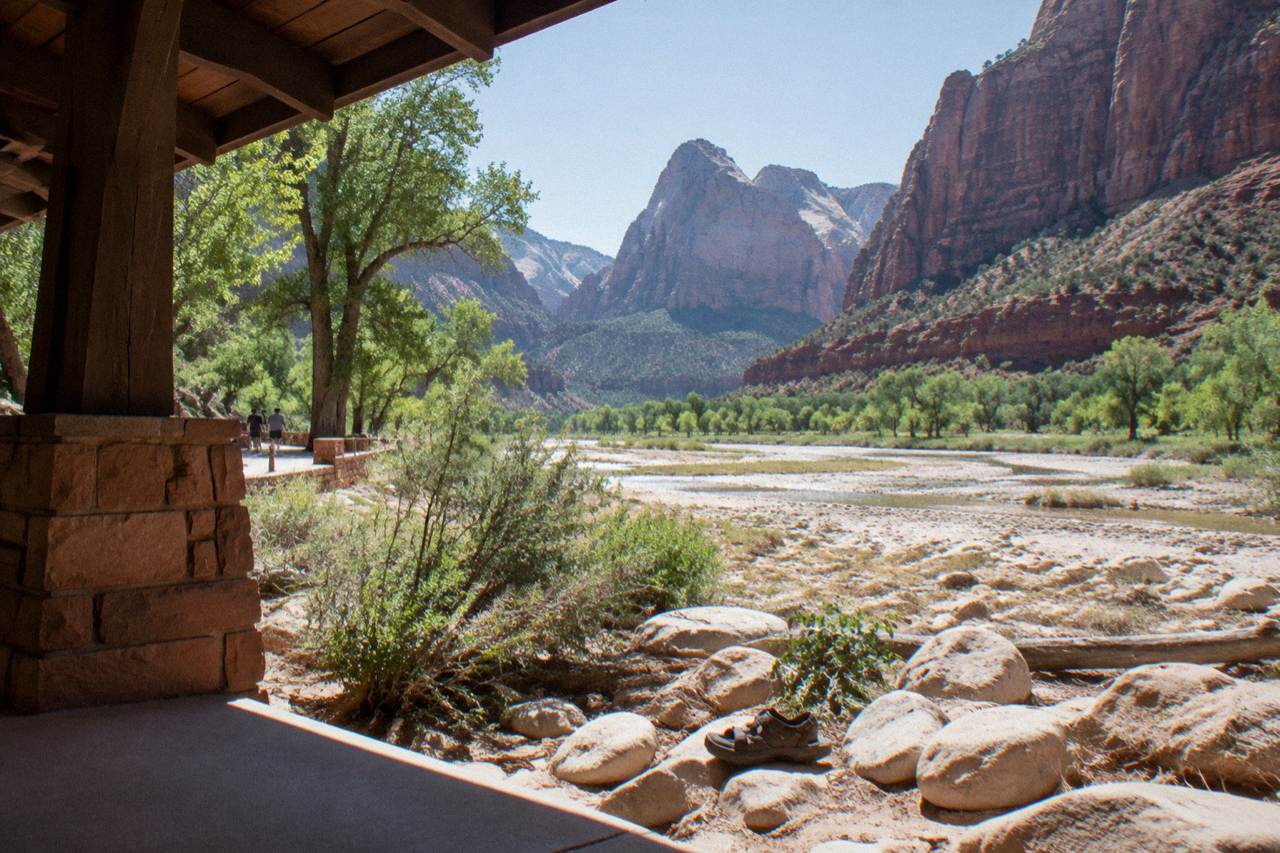
Zion National Park stays open 24 hours a day, year round, but the guided riding season inside the canyon does not. The National Park Service states that Canyon Trail Rides, the park's authorized concessioner, typically begins its guided trail rides in mid-March and runs them through October 31, weather permitting. That single fact anchors the whole month-by-month answer: pick a month between April and October and every ride option on the table, in-park and out, is live. Pick January, and the in-park rides are closed for the season, though outside-park stables near the east side keep going.
The month also decides everything that frames the ride. Summer in Zion regularly tops 100°F, the monsoon runs July through September with real flash flood risk in slot canyons, and the park sees roughly half a million visitors per month in peak season, with parking often full by 9 a.m. Outside the park, operators like East Zion Adventures and Rove & Ramble run their rides year round from Orderville and Mt Carmel, so a winter or early-spring trip is still rideable, just not in Zion Canyon itself.
We compared the park's own season pages, the verified operator facts and the live ride listings to build this month-by-month breakdown, and we tie each month back to the rides that actually suit it, from the East Zion White Mountain slot canyon ride to the Rove & Ramble sunrise ride built for beating the heat.
When Is Zion Best For Horseback Riding?
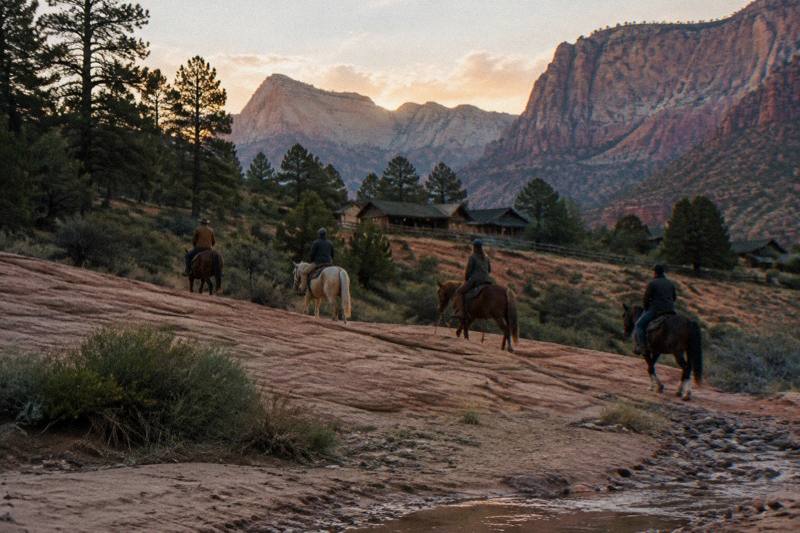
The best month to go to Zion is October, with April and May close behind. October keeps the full March-to-October ride season open, drops summer heat, thins the crowds after Labor Day, and adds fall color that starts at elevation and reaches the canyon floor by late month. May offers wildflowers and long days but rising heat; October delivers scenery, temperature and availability in one package.
That recommendation is not about scenery alone, because Zion is beautiful in every month. It is about the overlap of three windows. The first is the riding season: the NPS page on horseback riding in Zion states guided trail rides typically begin mid-March and run through October 31. The second is temperature: the park's own seasons page notes summer highs regularly exceed 100°F, which is hard on horses and riders alike, and rides in that window shift early or late in the day. The third is crowding: summer draws around half a million visitors a month, and available parking is often full by 9 a.m., which matters when your ride check-in is deep inside a shuttle-only canyon. If summer is still your only window for a ride, our guide to summer trail rides in Zion explains how early start times and monsoon weather shape a typical outing.
October threads all three needles. The concessioner's rides are still running through the 31st, morning temperatures are comfortable in the saddle by mid-morning, and the crush of June and July has passed. Fall color begins at higher elevations in late September and early October and works down into Zion Canyon toward the end of October, so a late-month visit can catch the cottonwoods turning along the Virgin River.
April and May are the runners-up. Spring brings blooming wildflowers as daylight and warmth return, the ride season is newly open, and waterfalls from snowmelt are at their most photogenic. The trade-off is variability: spring thaws and wet periods can close trails to stock inside the park, a rule the NPS applies to protect the tread, so a soggy April week can limit riding even when the concessioner is operating.
How Does The March To October Ride Season Shape The Answer?
Guided rides inside Zion run roughly mid-March through October 31, per the NPS, so any month in that band keeps every option open. Before mid-March and after October, the in-park concessioner rides stop entirely, and riders shift to outside-park stables near Orderville, Mt Carmel and Kanab, which run their own schedules. The season, not the weather alone, defines the good months.
The distinction matters more than most trip planners realize. Inside the park, Canyon Trail Rides operates as the authorized concessioner, with check-in at the Emerald Pool trailhead lot across from Zion Lodge, and reservations for the new season opening January 1, per the operator's own announcements. The operator's page lists a 1-hour Virgin River ride at $60 per person for ages 7 and up and a 3-hour Sand Bench ride at $125 for ages 10 and up, both with a 220 lb limit, though the booking page is the authority on prices and limits. Those rides simply do not exist in February or November.
Outside the park boundary, the calendar is different. The East Zion Adventures White Mountain ride, a one-hour trip from $75 per person rated 4.8 across 506 reviews, departs from east Zion near Orderville and includes a short hike into a slot canyon, an inclusion that ties it directly to the monsoon question later in this article. Its sibling, the Checkerboard Evening Shadow ride, is a 1.5-hour sunset trip from $89.
The outside-park rides fill the shoulder months when the concessioner is dark. The Kanab Cave Lakes Canyon ride near Kanab, 1.5 hours from $105 per person and rated 4.9 across 122 reviews, and the four Rove & Ramble listings from Mt Carmel, from $32 for the kids' Little Wrangler ride to $103 for the sunset trip, give riders options in November, December, January and February, months when the in-park corrals are quiet.
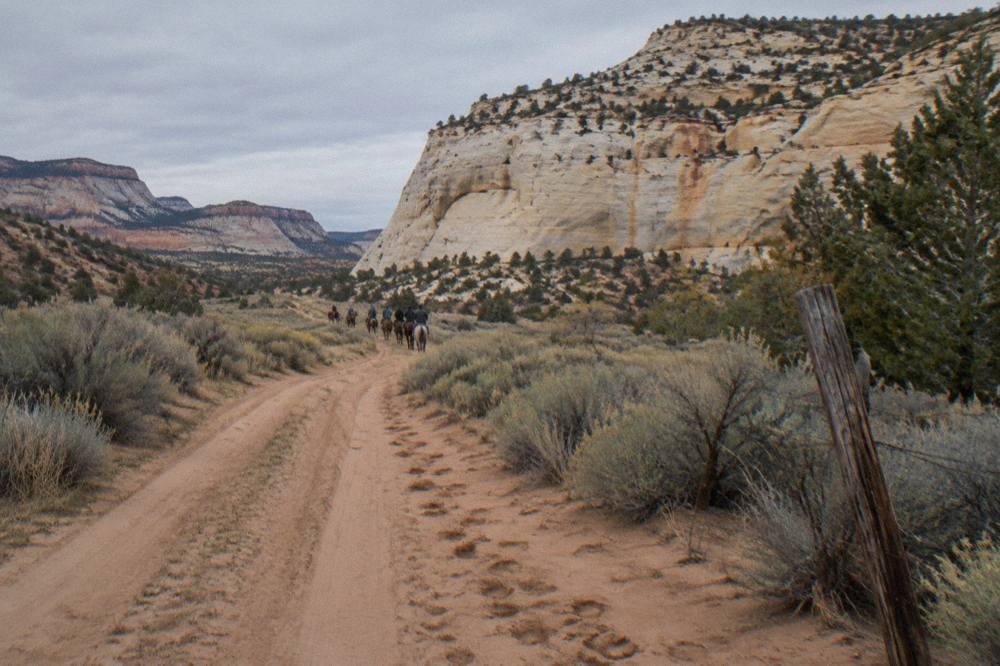
There is one scheduling wrinkle worth flagging from the NPS stock rules, even for guided-ride customers. The Sand Bench Trail inside the park serves as the commercial horse trail from March to October, but it opens to personal stock use only from November 1 to March 1. So the trail the 3-hour concessioner ride climbs all summer flips to a private-horse trail exactly when the concessioner shuts down. If you are weighing a November trip and hoped to ride Sand Bench commercially, that door closes October 31.
The same logic applies in reverse in spring. Stock use inside the park is prohibited during spring thaws, unusually wet periods, or whenever the superintendent judges use would cause undue trail damage, per the wilderness regulations. A warm, dry April usually means a full menu; a wet one can mean partial closures. The NPS conditions page is the check before you book a mid-spring ride.
What Are The Summer Months Like For Riding?
June through August in Zion means highs regularly over 100°F, monsoon thunderstorms beginning in July, and peak crowds of roughly half a million visitors a month with parking often full by 9 a.m. Riding is still possible, but the good summer rides are early-morning or sunset departures, and slot canyon add-ons carry flash flood risk from July through September.
Summer is when the park is at its fullest and hottest at the same time. The NPS seasons page is blunt about it: temperatures are regularly over 100°F, the monsoon runs July through September bringing flash flood risk, and all available parking is often full by 9 a.m. The park's own data on monthly patterns shows June at about 1.5 times the average monthly visitation, while January sits at roughly 0.3 times average, which tells you exactly where the people are.
For riders, that pushes the decision toward departure time rather than month. The Rove & Ramble sunrise ride from Mt Carmel, one hour from $85 per person, is built around exactly this: it lists sunrise timing, panoramic Grand Staircase views and a finish before the day heats up. In July and August, a 6 a.m. saddle time and a 2 p.m. saddle time are different vacations.
The monsoon deserves real respect, not a shrug. The NPS conditions page states the Narrows and all slot canyons close when Virgin River flow exceeds 150 cubic feet per second or when a flash flood warning is issued. The White Mountain ride includes a short hike into a slot canyon, one of its signature features, and that portion is exactly the kind of activity that monsoon forecasts touch. Operators watch the weather and adjust; the right move as a visitor is to book summer slot canyon time with flexibility, and never assume a dry morning means a dry afternoon.
Evening rides are the other summer answer. The Checkerboard Evening Shadow ride runs about 1.5 hours at sunset from $89 per person, and the Grandview sunset ride from Rove & Ramble, one hour from $103, adds the possibility of seeing bison on the range near Mt Carmel, though sightings are always a chance, never a promise. Sunset departures dodge the peak heat, and the Checkerboard ride makes a tidy way to close out the day.
| Month | Typical conditions | Ride implications |
|---|---|---|
| March | Season opens mid-month, variable weather | Concessioner rides begin; outside-park rides run throughout |
| April | Wildflowers, possible spring thaw wet periods | Full menu unless stock closures posted |
| May | Warm, long days, crowds building | Prime riding month; book ahead |
| June | Hot, driest month, peak crowds | Ride early morning or evening |
| July | Over 100°F, monsoon begins | Sunrise or sunset rides; slot canyon flood risk |
| August | Heat plus monsoon storms | Same as July; watch flash flood warnings |
| September | Monsoon tapers, crowds thin after Labor Day | One of the strongest months overall |
| October | Comfortable, fall color, season closes Oct 31 | Best single month; concessioner ends on the 31st |
Why Do Spring And Fall Work Well For Horses And Riders?
April, May, late September and October give riders moderate temperatures, lower flood risk than midsummer, and a live ride season inside the park. Horses work better in cool air, riders last longer in the saddle, and the shuttle and parking systems are less strained. Fall adds color at the canyon floor by late October; spring adds wildflowers and snowmelt.
The horse-welfare angle is real even when nobody prints it on a listing. Common riding guidance holds that a horse comfortably carries roughly 20 percent of its body weight, rider plus tack, which is why operators set firm limits like the 100 kg cap on the East Zion Adventures and Kanab rides, while the Rove & Ramble listings state no weight limit. But heat is a separate burden: a horse working in 100°F afternoon sun fatigues faster and recovers slower, which is one reason operators shift summer departures to the day's edges. Spring and fall remove that variable almost entirely.
For riders, the same months are kinder to bodies that have not spent much time in a saddle. An hour at a walk in 75°F is a pleasant morning; the same hour at 3 p.m. in August is a different experience, and our piece on whether riding is hard on your body covers what to expect. Beginning riders in particular benefit from shoulder-season conditions, and the beginner-friendly ride options near Zion skew toward exactly these months.
September deserves a special word. The monsoon tapers, Labor Day takes a bite out of crowds, temperatures slide back toward comfortable, and the concessioner is still running its full schedule through October 31. The first weeks of September can still throw a storm, so the flash flood caution never fully disappears until the monsoon pattern breaks, but it is the quietest of the strong months.
October then takes over as the single best answer. Fall color begins at the higher elevations and reaches Zion Canyon by the end of October and early November, per the park's seasons page, and the cottonwoods along the Virgin River turn gold right where the 1-hour concessioner ride travels. The White Mountain and Checkerboard rides on the east side sit at elevation themselves, so mid-October riders there catch the color a few days ahead of the canyon floor.
| Ride (operator) | Length | From price | Best months | Why |
|---|---|---|---|---|
| White Mountain slot canyon ride (East Zion Adventures) | ~1 hour | $75 | April-May, Sep-Oct | Dismount hike into a slot canyon; avoid monsoon peak |
| Checkerboard Evening Shadow ride (East Zion Adventures) | ~1.5 hours | $89 | May-Oct | Sunset departure dodges heat |
| Sunrise ride (Rove & Ramble) | ~1 hour | $85 | Jun-Aug | Built to beat summer heat |
| Juniper Ridge bison preserve ride (Rove & Ramble) | ~1 hour | $68 | Mar-May, Sep-Nov | Gentle terrain, family friendly, year-round viability |
| Cave Lakes Canyon ride (Roam Outdoor Adventure Co.) | ~1.5 hours | $105 | All year | Kanab location escapes in-park season closure |
What About Winter Months In Zion?
November through February close the in-park concessioner rides, but the park itself stays open year round and outside-park stables near Mt Carmel, Orderville and Kanab keep riding. January is the quietest month at roughly 0.3 times average visitation. Expect cold mornings, possible snow at elevation, and a shuttle schedule that shrinks or pauses.
Winter Zion is a different park. The visitor count collapses to its annual floor, the canyon is quiet, and the shuttle system contracts: the NPS schedule lists no canyon shuttle service from November 29 to December 25, with a limited holiday run from December 26 to January 2, and the schedule is always subject to change. Kolob Terrace Road and Kolob Canyons Road typically see seasonal snow closures at higher gates in fall and winter.
The riding does not stop; it moves. The Rove & Ramble rides from Mt Carmel, including the Juniper Ridge bison preserve ride at one hour from $68 per person and the gentle Little Wrangler kids' ride at 15 minutes from $32, run from a ranch that does not depend on the park's season. The Kanab Cave Lakes ride to the southwest operates on its own calendar too, and its 4.9 rating across 122 reviews holds up in any month. Riders who want more depth on the quiet months can read our guide to horseback riding in Zion in winter.
One honest caution: the fresh operator guidance for fall and winter riding near the east entrance recommends layers for cooler mountain temperatures, and east Zion sits high enough that a November morning can start below freezing even when Springdale is mild. The outside-park listings also carry no date promises about weather; the booking page and a forecast check the day before are the authority.
Winter riders also dodge the entrance-fee scramble in one specific way: with the shuttle paused or reduced and visitation low, driving to trailheads becomes possible again in the canyon, though the concessioner corrals are closed anyway. If riding is the whole point of the trip, winter points you to the ranch rides, full stop.
Which Month Has The Fewest Crowds And The Best Availability?
January is the quietest month at roughly 0.3 times the park's average visitation, and December is similarly calm, but both fall outside the in-park ride season. Among ride-season months, late September and October offer the best crowd-to-availability ratio: after Labor Day, visitation drops while the concessioner and outside-park operators run full schedules through October 31.
Crowds matter to riders more than to the average visitor, because riding logistics are time-boxed. The concessioner's check-in at the Emerald Pool trailhead lot across from Zion Lodge sits on the canyon scenic drive, which is closed to private vehicles during shuttle season, meaning riders reach check-in by shuttle and should not cut the timing close. The operator asks riders to arrive 30 minutes early, and a packed shuttle queue at 9 a.m. in June can threaten that buffer in a way an October morning does not.
The park's monthly distribution tells the story in ratios. June runs about 1.5 times average visitation, summer months cluster around half a million visitors each, and January sits near 0.3 times average. Between those poles, the shoulder months of April, May, September and October split the difference, with September and October trending calmer after the summer wave.
Availability on the outside-park rides follows the same curve in a smaller way. The most reviewed ride on the east side, the White Mountain ride with 4.8 across 506 reviews, fills first in the busy months, and its meeting logistics, parking at the pickleball courts lot and walking to the corrals, are simplest when the east side is not jammed. Booking two to four weeks ahead covers October comfortably; a June sunrise ride deserves more lead time.
| Month | Relative crowding | Ride season status | Overall verdict for riders |
|---|---|---|---|
| Jan | Lowest, ~0.3x average | In-park closed; ranch rides open | Quiet but limited to outside-park rides |
| Feb | Very low | In-park closed; ranch rides open | Same trade-off, slightly milder |
| Mar | Low, building | In-park opens mid-month | Good value; watch thaw closures |
| Apr | Moderate | Full season | Excellent |
| May | Moderate-high | Full season | Excellent, book ahead |
| Jun | Highest, ~1.5x average | Full season | Ride at sunrise or sunset only |
| Jul | Very high | Full season | Heat and monsoon complicate |
| Aug | Very high | Full season | Same as July, storms taper late |
| Sep | Moderate after Labor Day | Full season | Excellent |
| Oct | Moderate | Full season through Oct 31 | Best overall month |
How Do Shuttles, Fees And Trail Closures Change By Month?
The Zion Canyon shuttle runs daily from March through November with no reservation or ticket needed to ride it, then pauses from November 29 to December 25 before a brief holiday run; the schedule is subject to change. Entrance passes cost $20 to $35 depending on entry mode and are valid 7 days. Slot canyons and trails close episodically for flood risk and repairs, so check the NPS conditions page for your dates.
The fee side is simple and stable. The NPS fees page lists a $35 private vehicle pass valid 1 to 7 days, $30 for a motorcycle and $20 per person on foot, with a $70 Zion annual pass option. Non-US residents aged 16 and over pay an additional $100 per person unless they hold an applicable pass, a wrinkle international riders should budget for. The page also lists fee-free entrance days for US citizens and residents, and anyone entering the park, even just passing through on SR-9, needs a recreational use pass. Riders whose trip starts at an outside-park ranch near Mt Carmel or Orderville may not need the pass at all for the ride itself, so the pass is one more line to account for when you compare prices.
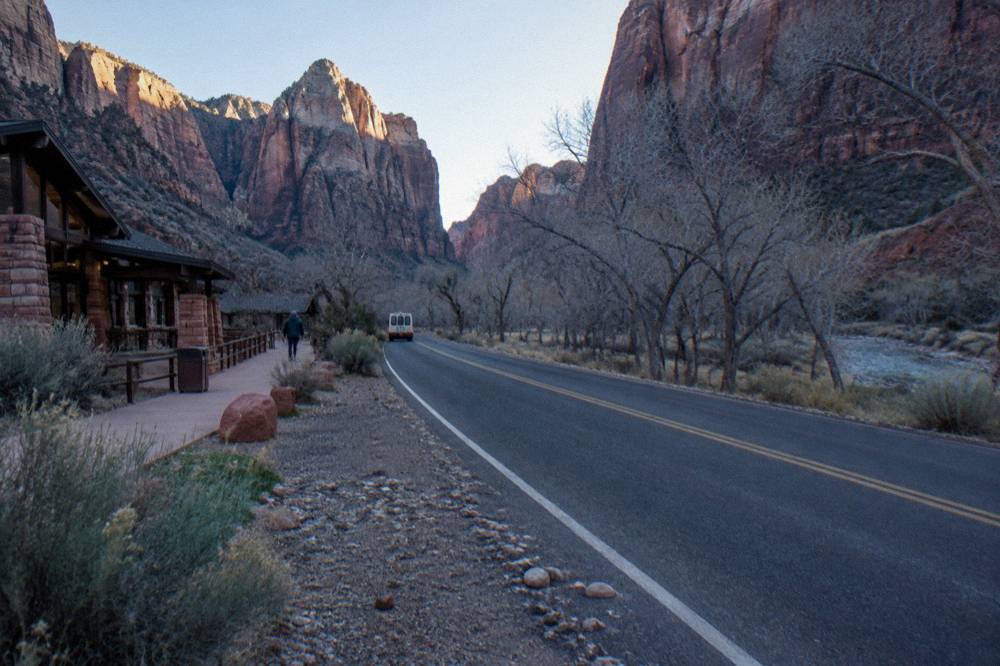
The shuttle side shifts by month and matters mainly for in-park riders. During shuttle season, private vehicles cannot drive the Zion Canyon Scenic Drive, and the Zion-Mt. Carmel Highway stays open to vehicles, so east-side ranch rides are unaffected. The published schedule moved the last visitor center departure to 5 p.m. from October 25 through November 28, with full suspension after that until the holiday run; the NPS notes plainly that the schedule is subject to change, so confirm timing near your dates. Our shuttle guide for horseback riders walks through the check-in timing in detail.
Closure awareness is the last monthly variable. Trails and slot canyons close for flood risk or repairs on a rolling basis, and the park has had active rockfall and trail repair closures in recent seasons. None of that usually touches the outside-park ranch rides, which run on private and public land beyond the boundary, but it can affect the slot canyon hike built into the White Mountain ride when flood forecasts turn serious. A two-minute check of the park's conditions page the day before any slot canyon activity is the habit worth building.
Putting it all together, the ranking for riders is straightforward. October wins, September and April follow, May is excellent with crowds, June through August demand sunrise or sunset departures and monsoon awareness, and November through February hand the calendar to the ranch rides east and south of the park. Whatever month you land on, the rides compared here, from the slot canyon hour on the east side to the sunrise loop at Mt Carmel, are the ones to check first for live dates and prices.
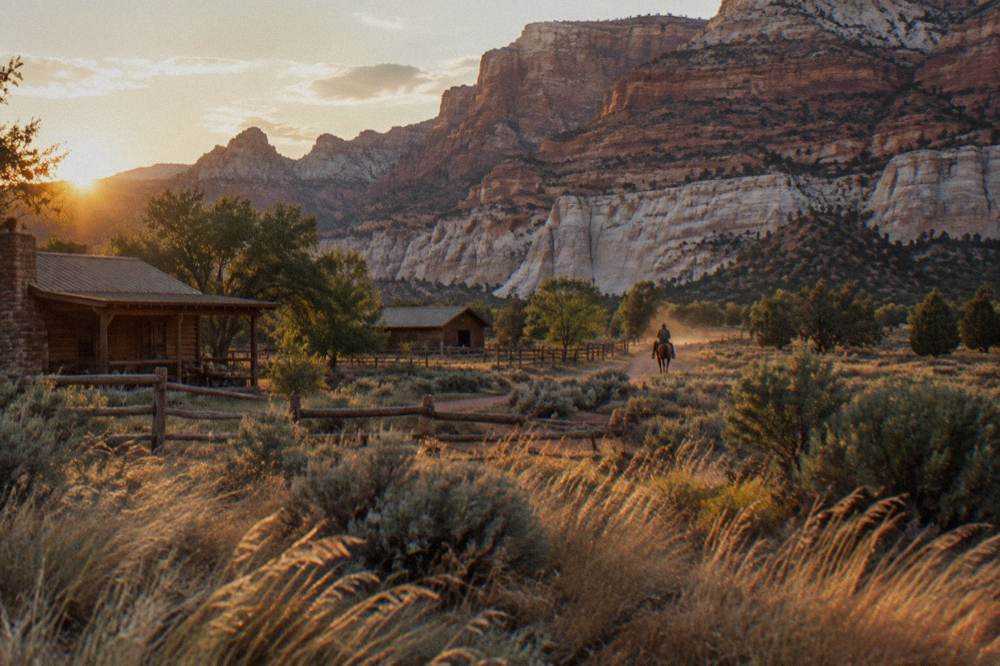
The month question ultimately has two honest answers. If you want the full Zion riding experience, canyon shuttle, in-park concessioner and every outside-park option live at once, aim for late September through October. If your dates are fixed in the quiet months, the east-side and Kanab ranches are running, the crowds are gone, and Zion Horseback Tours keeps the full comparison of those rides, prices and limits in one place. For the broader trip-planning frame around the park itself, the National Park Service seasons page and the current conditions listing are the two official pages worth reading before you book anything.
Common Questions About The Best Month To Visit Zion
What's the best month to go to Zion?
October is the best month for most riders: the guided ride season runs through October 31, heat and monsoon risk have passed, crowds thin after Labor Day, and fall color reaches the canyon floor late in the month. April, May and September are strong alternatives.
What months are horseback rides available inside Zion National Park?
Guided rides with the park concessioner typically begin mid-March and run through October 31, weather permitting. Outside-park ranch rides near Mt Carmel, Orderville and Kanab operate beyond that window, including through winter.
Is summer too hot for horseback riding in Zion?
Summer highs regularly exceed 100°F, so rides shift to sunrise and sunset departures. The monsoon from July through September also brings flash flood risk to slot canyons, which can affect rides that include canyon hikes.
Can you ride horses in Zion in the winter?
Not with the in-park concessioner, whose season ends October 31. Ranch rides outside the park, including the Mt Carmel and Kanab listings, continue in winter, and the park itself stays open year round.
What is the least crowded month at Zion?
January is the quietest month at roughly 0.3 times the park's average monthly visitation. Among months with the full ride season open, late September and October offer the best balance of low crowds and full availability.
Do I need an entrance pass if my horseback ride starts outside the park?
Rides departing from ranches near Mt Carmel, Orderville or Kanab generally do not require a park pass for the ride itself, but anyone entering Zion, even just driving through on SR-9, needs a recreational use pass. The Checkerboard evening ride has its own listing.