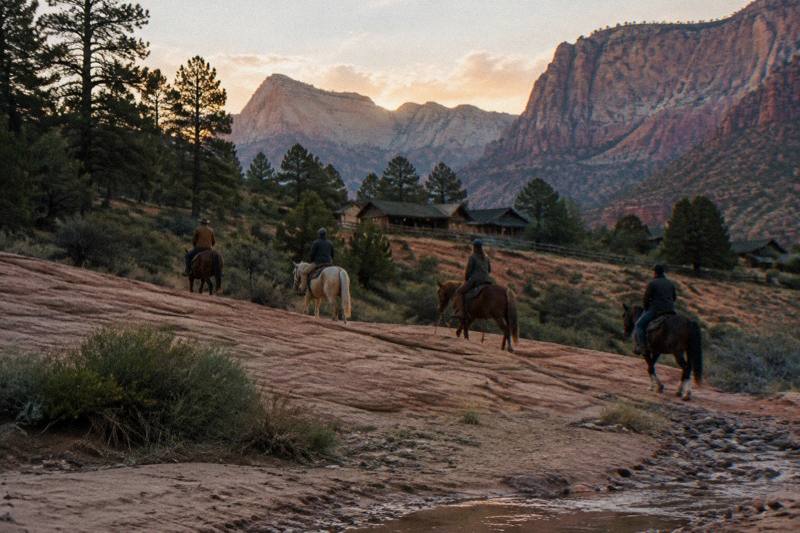
Which Is Nicer, Zion Or Bryce Canyon?
A rider's comparison of Zion and Bryce Canyon: scenery, rides, crowds, heat and where the horseback trails actually are near each park.
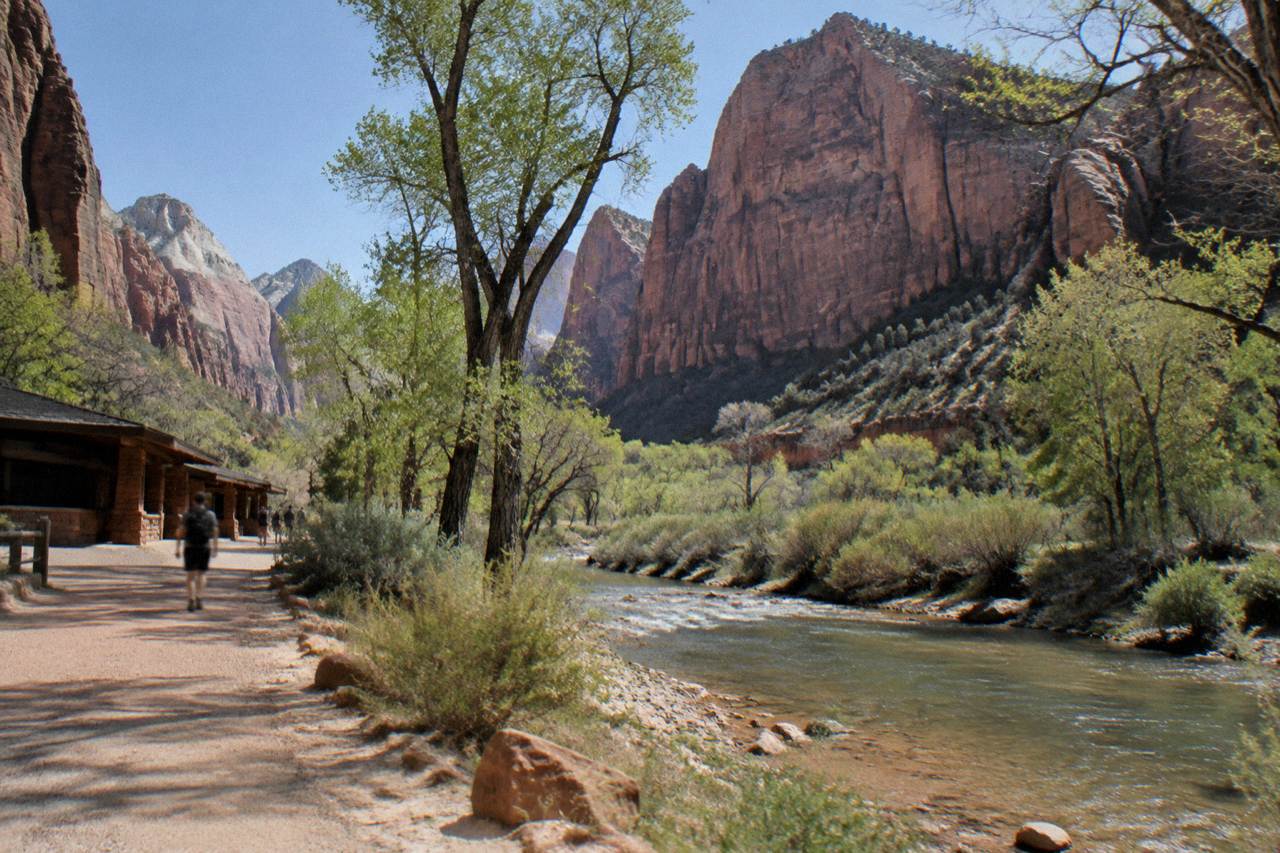
Southern Utah stacks its two headline parks close enough that most road trips try both. Zion National Park sits at the low end, a deep river canyon of towering sandstone walls, while Bryce Canyon sits high on the Paunsaugunt Plateau, famous for hoodoos, those thin spires of orange rock that fill amphitheaters instead of walls. The drive between the two entrance stations takes roughly ninety minutes along Highway 89, which means a rider can genuinely compare them in one trip, and a lot of people arrive asking which one deserves the limited saddle time.
The short version is that neither park is "nicer" in any objective sense, because they do different things. Zion is about depth and enclosure, riding below or beside colossal canyon walls; Bryce is about elevation and open spectacle, looking out across a landscape that resembles a stone forest. For horseback riders the comparison gets sharper, because the riding itself is distributed differently: inside Zion a concessioner runs guided rides along the Virgin River, while just outside the east side of Zion a cluster of independent ranches, including East Zion Adventures and Rove & Ramble, run the rides most visitors actually book, such as the East Zion White Mountain slot canyon ride and the Grandview sunset ride past the bison preserve. If the enclosed, river-level riding tips your decision toward Zion, our guide to Zion's don't-miss sights, rides, and logistics covers the shuttle-only canyon and the trail options waiting on both sides of the park.
How Do Zion And Bryce Canyon Compare?
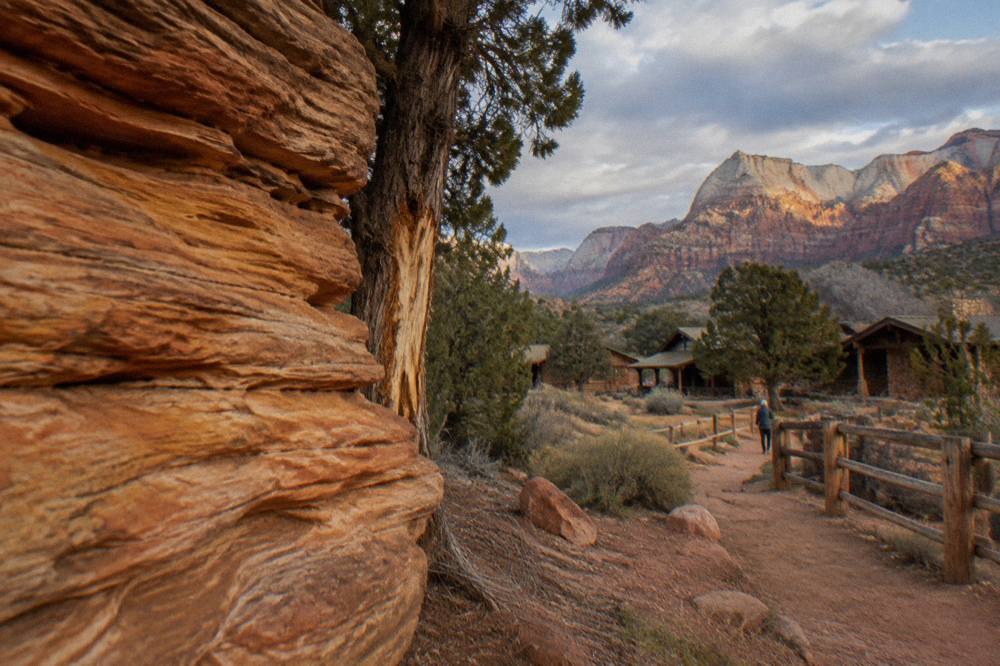
There is no honest single winner between them: Zion is nicer if you want enclosed canyon drama and river-bottom riding, while Bryce is nicer if you want elevated panoramic views of hoodoos, so the better park is simply the one matching the scenery you want most from a saddle. For riders, the practical differences matter more than the aesthetic ones. Zion's in-park concessioner rides run mid-March through October 31, the outside-park ranches near the east entrance run their own schedules, and Bryce's high plateau means cooler summer rides but harsher winter access. Deciding between them is really deciding between a canyon and a skyline, and the choice of ride base shapes it as much as the choice of park does.
The comparison this site cares about is the riding angle, and there is a fuller treatment of that trade in the Zion vs Bryce riding guide, which breaks down the operators around each park side by side. This article takes the broader question, which park is nicer, and answers it the way a trail planner would: scenery, crowds, heat, season, and what a horse actually adds in each place.
Start with what each park protects. Zion National Park centers on Zion Canyon, a gorge carved by the Virgin River through reddish Navajo sandstone, with walls that rise hundreds of feet above the canyon floor. The National Park Service describes summer temperatures in the canyon as regularly over 100°F, and visitation in summer runs around half a million people per month. Bryce Canyon, an hour and a half northeast, protects a series of natural amphitheaters filled with hoodoos, formed by frost wedging and erosion over millions of years. Its elevation leaves it substantially cooler in summer and snowier in winter. One park is a corridor you move through; the other is a rim you look across.
From a saddle, those shapes translate differently. In Zion country, a rider moves through landscape, flanked by walls, following drainages, occasionally dismounting into a slot canyon, as the East Zion Adventures White Mountain ride does with its short hike into a slot canyon after the ride. Around Bryce, a rider mostly looks at landscape, taking in wide views across pink and orange stone from open plateau and forest trails. Neither is better. They are different products.
Which Is Nicer, Zion Or Bryce?
For pure first-impression drama, Bryce's overlooks land harder in the first minute, while Zion rewards time spent moving through its canyon country, so riders who want the scenery to unfold gradually lean Zion and riders who want an instant panorama lean Bryce. The rider's tiebreaker is position: the ranches around east Zion and Mt Carmel, including the Rove & Ramble operations, sit between the two parks, and the Grandview sunset ride markets exactly that, with panoramic sunset views of Zion National Park, Bryce Canyon and the Grand Staircase from one vantage. In effect, you can cheat the question entirely by riding the middle.
That geography is the most underappreciated fact in the whole debate. Mt Carmel lies on US-89, the connecting road between Zion's east entrance and Bryce. Riders based there can ride in the morning, drive to either park in the afternoon, and never commit to one. The Grandview Sunset Horseback Ride from that ranch country runs about an hour, from $103 per person, with a stated chance to see bison on the preserve it circles. The same operator runs a sunrise ride from $85 per person with views of the Grand Staircase, Zion's East Gate and distant Bryce Canyon.
Is that combination the real answer? A lot of riders think so. The listing for the Checkerboard Evening Shadow ride from East Zion Adventures covers a 1.5-hour evening ride from $89 per person, rated 4.7 across 46 reviews, an option that keeps you riding open rangeland while the last light fades.
The honest framing is this: "nicer" collapses into three smaller questions, each with a real answer. Which scenery, canyon walls or hoodoo amphitheaters? Which ride menu, since east Zion has the denser cluster of bookable ranch rides while the immediate Bryce area relies on a smaller set of outfitters? And which logistics, since Zion runs a mandatory shuttle in the canyon during the season while Bryce's rim road stays drivable in the off season? The rest of this article takes those one at a time.
What Does Each Park Look Like From The Saddle?
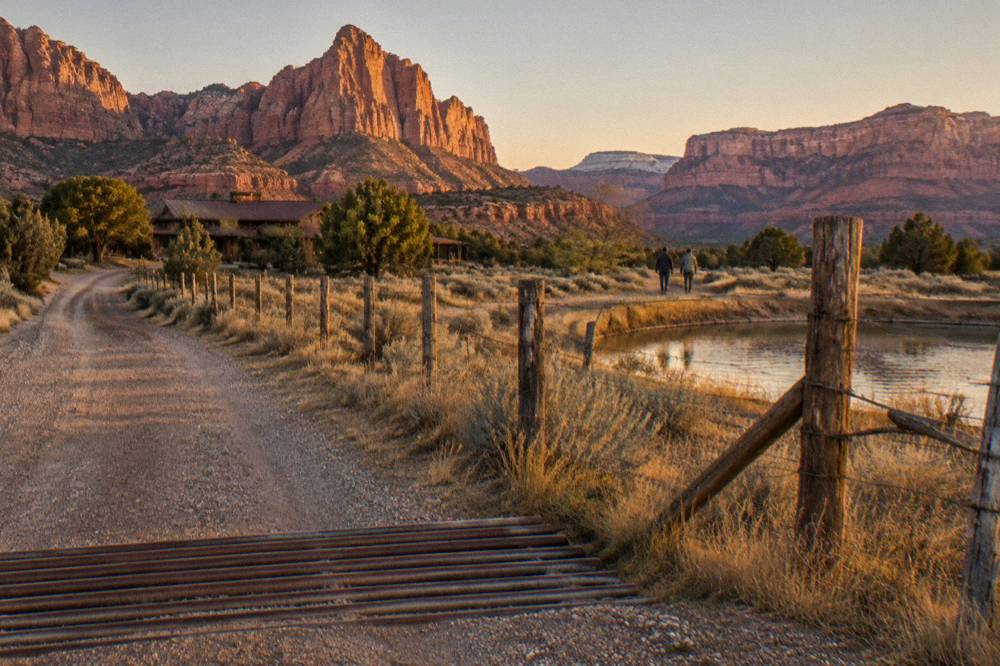
From the saddle, Zion puts riders inside its scenery: canyon walls rise close on either side, and trails thread through sandy washes and juniper flats, so the riding feels immersive rather than wide open. Bryce is the opposite, with plateau trails sitting high above hoodoo-filled amphitheaters that stretch into sweeping views, making the riding feel panoramic. Neither style uses the parks' marquee overlooks directly, and that surprises first-time visitors. The concessioner rides inside Zion follow the Virgin River and the Sand Bench Trail; the outside-park ranch rides around east Zion cross working rangeland with the parks as backdrop rather than subject. That distinction shapes expectations more than any rating or review pool ever will.
Inside Zion, the National Park Service states that its concessioner, Canyon Trail Rides, offers 1-hour or 3-hour guided horse and mule rides along the Virgin River and the Sand Bench Trail, with guided rides typically running mid-March through October 31, weather depending. The operator's page prices the 1-hour Virgin River ride at $60 per person for riders 7 and up, and the 3-hour Sand Bench ride at $125 per person for riders 10 and up, both with a stated 220-pound weight limit. The 1-hour route follows the river about a mile to the Court of the Patriarchs and back, which is about as intimate as canyon scenery gets: walls close enough to study, cottonwoods overhead, water alongside.
Outside the east side of the park, the rides trade walls for sweep. The East Zion Adventures White Mountain ride, about an hour from $75 per person and rated 4.8 across 506 reviews, the most reviewed ride on this site's lineup, ends with a short guided hike into a slot canyon, folding a piece of Zion's signature narrow-rock experience into a horseback outing. The Kanab Cave Lakes Canyon ride, about 1.5 hours from $105 per person and rated 4.9 across 122 reviews, rides a green canyon near Kanab, sitting southwest of both parks but closest in spirit to canyon-country riding.
Bryce's riding scene, by contrast, leans on outfitters running plateau and forest trails along the rim country, where the payoff is the long view into the amphitheaters rather than passage through them. The comparison table below compresses the scenery question:
| Factor | Around Zion | Around Bryce |
|---|---|---|
| Signature scenery | Deep river canyon, sheer sandstone walls, slot canyons | Hoodoo amphitheaters viewed from plateau rim |
| Riding feel | Immersive, riding inside landscape | Panoramic, riding above landscape |
| Elevation profile | Canyon country at the low end, plateaus rising eastward | High plateau, noticeably cooler summers |
| Summer heat | NPS lists canyon temps regularly over 100°F | Cooler at elevation, still exposed sun |
| Marquee in-park ride | Concessioner Virgin River and Sand Bench rides | Rim-country rides from area outfitters |
How Do Crowds, Heat And Season Change The Answer?
Season reshapes the answer: Zion runs hotter, busier and shuttle-managed in its core canyon, while Bryce stays cooler and quieter relative to its own overlooks and holds snow longer in winter, which means spring and fall are the better windows for Zion riding, while midsummer favors Bryce and its elevation. The National Park Service says summer brings around half a million visitors per month to Zion and parking often fills by 9 a.m., which is the single best argument for basing a riding day outside the canyon and entering the park early or late. Outside-park ranches sidestep that pressure entirely, and that changes the practical verdict more than scenery does.
Timing details sit in the best month to visit Zion writeup, but the riding-specific shape is simple. June runs roughly 1.5 times the park's average monthly visitation while January sits near 0.3 times, and guided in-park rides pause outside the mid-March to October 31 window, so the shoulder months deliver both ride availability and thinner crowds. The monsoon, July through September, adds flash-flood risk; slot canyons in Zion close when the Virgin River flow exceeds 150 cubic feet per second or when a flash flood warning is issued, and the NPS notes the Narrows and slot canyons have closed for forecast rainfall. The White Mountain ride's slot canyon hike is exactly the kind of feature that flexes with those conditions, so treat it as a highlight the operator describes as included, not a guarantee of conditions.
Winter flips the verdict. The park stays open 24 hours a day year-round, and the Sand Bench Trail inside Zion opens to personal stock only from November 1 to March 1, the window when commercial rides are off it. Snow settles harder on the Bryce plateau. The practical winter answer, covered fully in the winter horseback riding guide, is that east Zion's lower rangeland rides keep running where weather allows and are the more reliable saddle time November through February.
For riders, season also changes what to wear and how early to book. Summer riders around Zion need closed-toe shoes, sun protection and water, per standard operator guidance, and the sunrise rides exist precisely to beat heat: the Rove & Ramble sunrise ride from $85 per person is built around that logic, departing Mt Carmel for a one-hour loop with views of the Grand Staircase. A sunset pairing does the same from the other end of the day.
Where Should A Rider Actually Book?
Most riders comparing the two parks end up booking outside-park ranch rides around east Zion, because that cluster offers the widest menu, the slot canyon and bison country highlights, and a base between both parks, while the in-park concessioner rides are booked directly with the operator and sell out early in season. The outside-park listings compared on this site run from $32 per person for the 15-minute hand-led Little Wrangler kids' ride up to $105 per person for the Kanab canyon ride, a range wide enough to fit most trips.
The lineup in one view:
| Ride | Operator, base | Length | From (per person) | Rating on listing |
|---|---|---|---|---|
| White Mountain slot canyon ride | East Zion Adventures, East Zion | ~1 hour | $75 | 4.8 across 506 reviews |
| Checkerboard evening ride | East Zion Adventures, East Zion | ~1.5 hours | $89 | 4.7 across 46 reviews |
| Grandview sunset bison ride | Rove & Ramble, Mt Carmel | ~1 hour | $103 | 5.0 across 3 reviews |
| Sunrise scenic ride | Rove & Ramble, Mt Carmel | ~1 hour | $85 | 5.0 across 1 review |
| Juniper Ridge bison preserve ride | Rove & Ramble, Mt Carmel | ~1 hour | $68 | 4.7 across 3 reviews |
| Little Wrangler kids' ride | Rove & Ramble, Mt Carmel | ~15 min | $32 | no rating yet |
| Cave Lakes Canyon ride | Roam Outdoor Adventure Co., Kanab | ~1.5 hours | $105 | 4.9 across 122 reviews |
Age and weight limits matter when a family is choosing. Only the White Mountain ride sets a minimum age of 8, and it joins the Checkerboard and Kanab rides in a 100 kg rider weight limit; the Grandview, Sunrise and Juniper Ridge listings state no age or weight figures, and the Little Wrangler hand-led ride takes children from age 3. The in-park concessioner rides sit at ages 7 and 10, 220 pounds, per the operator's page. If a family splits between a 6-year-old and a 10-year-old, the ranches near Mt Carmel are the only ones that can mount both, one on the Juniper Ridge bison preserve ride from $68, the other on a hand-led loop.
The booking-authority point deserves one clear sentence: prices here are snapshots, and the operator's live listing shows the current price, inclusions and season. Nothing in this comparison should be read as a held seat.
Riders carrying their own horses face a different calculus entirely, since personal stock is allowed on Zion's designated trails with no day-use permit, a maximum of six animals per party, and a prohibition during spring thaws and unusually wet periods; the stock-use rules guide lists the open trails. Bryce's rules differ again. That community skews toward Zion for winter access precisely because the lower trails dry out sooner.
Can You Ride And See Both Parks On One Trip?
Yes, comfortably: the parks sit about ninety minutes apart, riders based in Mt Carmel or Orderville can reach either entrance for a half-day visit, and a sunrise or sunset ranch ride on the middle day replaces the weakest in-park slot, so the either-or question usually dissolves into an itinerary question. The classic pattern is two days of Zion canyon, one day of Bryce overlooks, with a ride from the east-side ranches stitched into the evening.
The full itinerary logic, including whether one frantic day works, is laid out in can you do Zion and Bryce in one day; the short answer there is that one day forces you to pick a highlight in each park and skip the rest. Two to three days is the realistic minimum for a riding trip that includes both, and the east-side ranches are what make it flow. A morning sunrise ride from Mt Carmel, the drive up to Bryce for an afternoon on the rim, then a second Zion day riding the White Mountain slot canyon loop or handing the kids to a wrangler, is a trip that samples every register of both parks.
Logistics notes that affect riders specifically: during shuttle season private vehicles cannot drive Zion Canyon Scenic Drive, so the in-park concessioner check-in at the Emerald Pool trailhead lot across from Zion Lodge is reached by shuttle unless you hold a lodge reservation, and the NPS schedule is subject to change. The east entrance side, where the ranch rides depart, avoids all of that; riders park at the pickleball courts lot for the White Mountain ride and walk to the corrals, and the Mt Carmel ranches are meet-at-the-ranch with no pickup. Entrance fees apply to the parks themselves, $35 for a private vehicle valid 1 to 7 days at Zion.
So which is nicer? If forced to a single sentence: Zion is the nicer park to ride around, because the ride cluster between its east gate and Bryce does the job of both, and this site's own Zion Horseback Tours comparison exists exactly because that corridor concentrates the saddle time. Bryce is the nicer park to look at for one stunned hour from the rim. Riders get to have both, and the smarter question is which sunrise you book.
Common Questions About Zion Vs Bryce
Which Is Nicer, Zion Or Bryce Canyon?
There is no objective winner. Zion offers enclosed canyon scenery, river-level riding and a dense cluster of outside-park ranch rides; Bryce offers cooler summers and instant panoramic hoodoo views. Riders who want scenery to unfold gradually favor Zion, and riders who want a single dramatic overlook favor Bryce.
Which is nicer, Zion or Bryce?
For riders specifically, the east Zion corridor usually wins, because the ranches around Mt Carmel and Orderville sit between the two parks and offer sunrise, sunset, slot canyon and kids' rides from $32 to $105 per person, letting one base serve both parks.
Can you ride horses inside both parks?
Inside Zion, the NPS concessioner runs 1-hour and 3-hour guided rides along the Virgin River and Sand Bench Trail, mid-March through October 31, booked directly with the operator. Around Bryce, area outfitters run rim-country rides outside the park boundary. The rides compared on this site are the outside-park listings near east Zion and Kanab.
Which park is better in summer?
Bryce, for heat. The NPS lists Zion canyon summer temperatures regularly over 100°F with parking often full by 9 a.m., while Bryce's elevation keeps it cooler. Zion riders can offset this with the sunrise ride from $85 or evening rides like the Checkerboard from $89.
Is one day enough for Zion and Bryce?
Not for riding both properly. The parks sit about ninety minutes apart, so a rushed single day covers one highlight in each with no saddle time. Two to three days lets you ride at sunrise or sunset from the ranches between the parks and still see both canyon and hoodoos.