What To Wear Horseback Riding In Zion, Season By Season
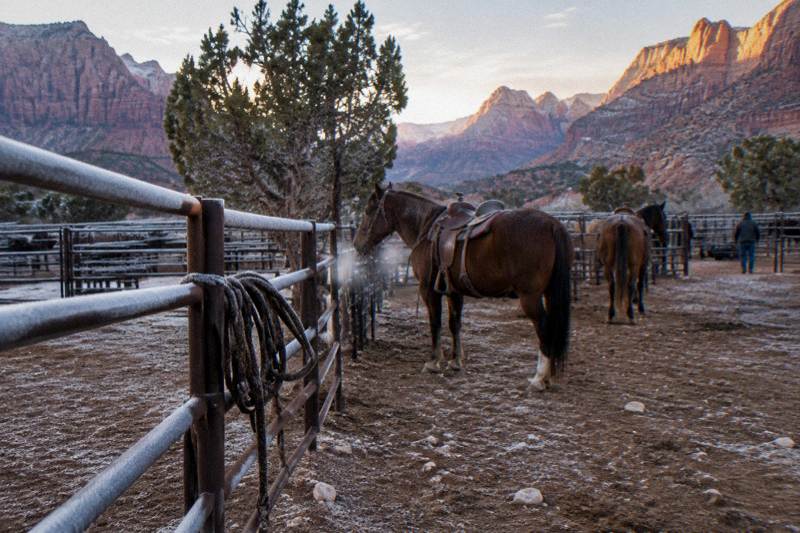
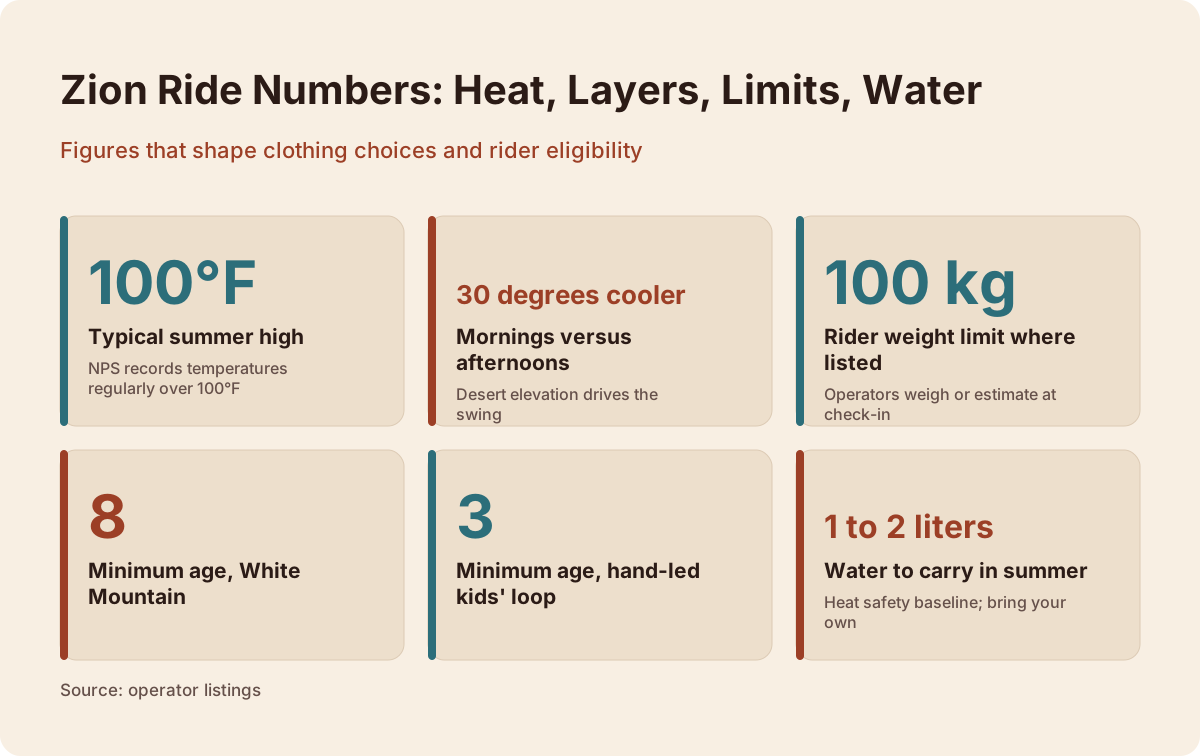
What you wear on a horse in that environment is a safety decision, not a style one: summer heat regularly tops 100 degrees, monsoon storms arrive without much warning, and winter mornings near the east entrance can sit below freezing on the same day the afternoon feels mild.
Short answer
Wear long pants, closed-toe shoes with a small heel, and layered tops you can shed as the day warms. Zion summers run over 100°F, so light colors, a hat and sunscreen matter; spring and fall need morning layers; winter needs a real jacket and warm socks. Every ride on this site enforces closed-toe footwear, and weight and age limits are checked at check-in.
Summer in Zion Canyon is not a mild version of summer. The National Park Service's own seasons page records temperatures regularly over 100°F, and parking across the park is often full by 9 a.m. because roughly half a million people visit in a single summer month. What you wear on a horse in that environment is a safety decision, not a style one. The same is true in January, when the higher country near the east entrance holds frost well past breakfast, and in late July, when a monsoon cell can drop a flash flood warning on a slot canyon that was bone dry an hour earlier.
This guide walks through the clothing question the way riders actually face it: pants first, then footwear, then the layering system, then the season-by-season specifics for the rides near Zion's east side and out toward Kanab and Mt Carmel. Along the way it folds in the official rules that touch clothing, the operator-stated limits that decide who can ride at all, and the small gear items that make a one-hour ride comfortable instead of merely survivable.
What Pants Should You Wear Horseback Riding?
Long pants are the single most important clothing choice for a Zion-area ride. Jeans or other sturdy long trousers protect your calves and inner thighs from chafing against the saddle leather, from brushing juniper branches on narrow stretches, and from the sun, which matters more than most visitors expect at this latitude and elevation. Shorts are a poor idea on any ride longer than fifteen minutes, and leggings without any thickness to them tend to bundle at the knee.
Every operator whose rides this site compares runs trail string rides through high desert scrub. The East Zion White Mountain ride, a one-hour route from Orderville that ends with a short hike into a slot canyon, includes dismounted time on sand and rock, which is exactly the moment a pair of shorts stops feeling carefree and starts feeling abrasive. The same logic applies to the Kanab Cave Lakes canyon ride, a ninety-minute route through a greener canyon bottom where brush reaches toward the trail.
Fabric choice comes down to two workable options. Denim is the default because it is thick enough to stand between skin and saddle leather all day, and because almost everyone already owns a pair. Synthetic hiking trousers work too, provided they have a flat or near-flat inseam; a heavy raised seam across the inner thigh is what actually causes saddle sores on short rides, not the riding itself. Avoid cotton sweatpants, which stay damp with sweat and then chill you the moment a breeze picks up, and avoid anything so loose it flaps near the horse's flank.
What Shoes And Boots Work Best For A Trail Ride?
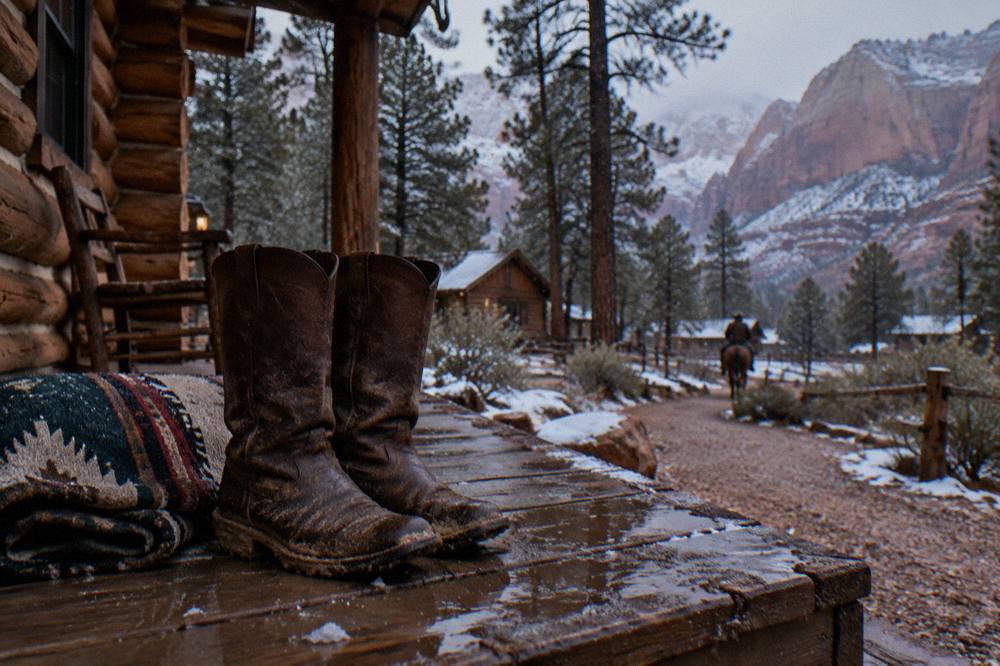
Closed-toe shoes are required, and a small heel is the classic recommendation. Boots with a roughly one-inch heel keep your foot from sliding forward through the stirrup, which is the one foot position that genuinely matters for safety on a trail ride. Sturdy athletic shoes with a grippy sole are usually accepted where no boot requirement is stated, but sandals, flip-flops, slip-ons and anything open-backed are not appropriate on any listing this site covers.
The reason for the heel is old and practical. If a foot slides all the way through a stirrup and the rider falls, the stirrup can trap the ankle. A heel catches on the stirrup's edge and stops that slide. It does not need to be a cowboy boot; a lightweight hiking boot, a work boot, or even a low-heeled leather shoe with a firm sole does the same job. What fails the test is the soft, flexible sole of a worn-out sneaker combined with a smooth tread, because it gives the foot nothing to brace against.
Consider the dismounted portions too. The White Mountain ride includes a short walk into a slot canyon, so the shoe that carried you on the horse also needs to handle sand, uneven rock and possibly a shallow puddle left from a storm days earlier. On the Little Wrangler kids' ride near Mt Carmel, a fifteen-minute hand-led loop for riders as young as three, the shoe question is simpler, but closed toes still apply; a child in sandals who gets stepped on by a quiet horse has a ruined afternoon.
A note on new boots: do not break them in on ride day. A stiff new pair rubbed against a stirrup for ninety minutes produces blisters in exactly the place you cannot reach in the saddle. Wear boots you have already walked in, and pair them with socks tall enough that the boot top never touches bare skin.
How Should You Layer For Zion's Swings In Temperature?
Plan a three-part layering system for spring, fall and winter rides: a moisture-wicking base layer, an insulating mid layer such as a fleece or light down jacket, and a wind-resistant outer shell. Zion's desert elevation means mornings can be 30 degrees cooler than afternoons, so the goal is clothing you can remove in stages and hand to the wrangler or tie to the saddle rather than clothing you simply endure.
The scale of the swing surprises people. A sunrise ride near Mt Carmel, such as the Rove & Ramble departure that looks east over the Grand Staircase toward Bryce Canyon, begins in the coldest hour of the day. The same rider is unzipping everything within two hours. A sun-fleece-zipper sequence handles that range; a single heavy coat does not, because a sweat-soaked coat turns cold the instant the ride ends.
| Layer | What it does | Good examples | Common mistake |
|---|---|---|---|
| Base | Moves sweat off skin | Synthetic or merino t-shirt, light long sleeve | Cotton, which stays damp |
| Mid | Traps warmth | Fleece pullover, light down or synthetic puffy | One thick sweater instead of two thin pieces |
| Outer | Blocks wind and light rain | Windbreaker or shell with a hood | No outer layer on a "warm" morning |
Cotton deserves its own warning in the desert, and it cuts both ways. In summer, a cotton shirt soaked with sweat helps you cool, briefly. In every other season, the same damp cotton pulls heat out of you once the sun drops or the ride climbs. The fix is cheap: one synthetic or wool base layer in your bag from October through April.
For the evening rides, layering matters even more than at sunrise. The Checkerboard Evening Shadow ride from East Zion Adventures runs about ninety minutes into the shadows on the east side, and evening is when the red rock gives up its heat fastest. The listing notes that meeting details arrive in the booking confirmation, so read it with your layering plan in mind, not just your arrival time.
A rider who has already booked, or is about to, is usually the one asking these wardrobe questions, and the answer is the same for every listing on this site: nothing you need to buy is specialized. Gear you already own for day hiking in southern Utah will serve on horseback, with the one exception of the shoe, where the heel rule is worth honoring.
What Should You Wear Riding In Zion In Summer?
In summer, wear light-colored, loose long pants, a breathable long-sleeve sun shirt, a wide-brim hat that fits under a helmet, sunglasses and high-SPF sunscreen on every exposed surface, and carry more water than feels reasonable. Zion summers regularly exceed 100°F, and the rides near the east side of the park sit at elevation where the sun's intensity compounds the air temperature.
The counterintuitive move in desert heat is covering up rather than stripping down. A loose, light-colored long sleeve blocks more heat than bare skin absorbs, which is why people who work outside in the Southwest wear them all summer. Sunscreen on the back of your neck, your ears and the part line of your scalp needs reapplying before a ride even if you put it on at the hotel, because a hour of desert sun burns through morning application.
| Summer item | Why it matters | Notes |
|---|---|---|
| Light long-sleeve sun shirt | Blocks UV while venting heat | Loose fit beats tight |
| Wide-brim hat | Shades neck and ears | Must sit under a helmet if one is worn |
| High-SPF sunscreen | Reflected light off rock burns from below | Reapply before check-in |
| 1 to 2 liters of water | Heat safety baseline | Bring your own |
| Bandana | Wet it for evaporative cooling | Also keeps dust off in dry wind |
Timing is part of dressing for summer. The sunrise ride from Mt Carmel exists precisely for this: it starts in the coolest window the day offers. If summer is your season, the deeper planning questions are covered in the guide to riding through Zion's summer heat, and the calendar tradeoffs are laid out in the broader piece on the best time of year for riding near Zion.
The monsoon adds one clothing item most visitors forget: a compact rain shell from July through September. Monsoon storms build in the afternoon, and the park's slot canyons close when flash flood warnings are issued. Operators watch the forecast and will not run a ride into danger, but a rider caught in a twenty-minute desert downpour without a shell spends the rest of the day wet and cold in air-conditioned vehicles. The National Park Service's seasons page is direct about the pattern: monsoon season runs July through September and brings flash flood risk, and the NPS maintains current seasonal guidance for Zion.
What Should You Wear Riding In Zion In Spring And Fall?
Spring and fall are the best clothing seasons but the trickiest packing seasons: start with the full three-layer system in the morning, expect to shed the outer layer by mid-ride, and keep a rain layer within reach in spring. Fall is the gentler of the two, with warm afternoons and crisp starts, while spring can swing from near-winter mornings to short-sleeve afternoons within a single week.
Fall color is a genuine draw. The NPS notes that fall colors begin at higher elevations and reach Zion Canyon by the end of October and early November, which lines up with the final weeks of the guided in-park season; Canyon Trail Rides, the park's authorized concessioner, typically operates mid-March through October 31 depending on weather, as stated on the NPS horseback riding page. The outside-park rides this site compares keep running past that date, and a November ride near Mt Carmel can be the best clothing-weather ride of the whole year.
The bison rides deserve a mention here because their best light is golden hour. The Juniper Ridge bison preserve ride and the Grandview sunset ride both run about an hour from the same ranch country near Mt Carmel, and both look west toward Zion, Bryce and the Grand Staircase. Sunset in October means a ride that starts in shirt sleeves and ends in your puffy jacket; pack both. Sightings of the bison herd are possible but never promised, and no listing should be read otherwise.
Spring's wrinkle is mud and water. Stock use in the park itself is prohibited during spring thaws and unusually wet periods, per the park's wilderness regulations, and while that rule governs the in-park trails rather than private ranch land, the same wet ground affects everything. Boots with real tread, not smooth soles, are the call for March and April rides, and pants you do not mind getting dusted with mud at the dismount.
| Month range | Typical feel at ride time | Wear this | Skip this |
|---|---|---|---|
| March to mid-April | Cold starts, mild middays | Full layers, warm socks, wind shell | Short sleeves at check-in |
| Late April to May | Warming fast, wind likely | Light layers, rain layer in pack | Heavy coat |
| September to mid-October | Warm to hot afternoons | Sun gear plus one evening layer | Nothing extra |
| Mid-October to November | Crisp starts, golden light | Three layers, gloves for sunrise | Sandals, shorts |
What Should You Wear Riding In Zion In Winter?
In winter, wear real insulation: a warm hat, gloves, a windproof insulated jacket over layers, wool or synthetic socks, and warm long pants. Winter rides near Zion run in the cold half of the day by choice because the low sun makes the rock walls glow, and temperatures on the east side and toward Mt Carmel regularly sit below freezing at departure time, even when the afternoon climbs well above it.
The good news is that a horse generates a surprising amount of warmth under you, and a walk-pace ride is not wind-chill riding. The bad news is that your fingers, toes and face take the full brunt, and they are the parts you cannot move much while holding reins. Gloves need to be thin enough to feel the reins and grip them; bulky ski gloves are worse than a snug insulated pair designed for cool-weather hiking or riding.
| Winter item | Purpose | Detail |
|---|---|---|
| Insulated, windproof jacket | Core warmth at pace | Hood helps on the return leg |
| Thin warm gloves | Rein feel plus warmth | Fleece or light insulated |
| Warm hat under helmet | Most heat loss is the head | Must fit flat |
| Wool or synthetic socks | Toe warmth in stirrups | Feet barely move; circulation matters |
| Warm long pants | Leg warmth against leather | Fleece-lined trousers or long johns under jeans |
Winter also shifts which rides make sense. The short loop options shine here: an hour in the cold is a very different experience from ninety minutes, and the family rides near Mt Carmel, including the gentle Juniper Ridge loop around the bison preserve, are priced and paced for exactly this kind of outing. For the full picture on the quiet season, see the guide to horseback riding near Zion in winter.
One planning note for families: the Little Wrangler ride is a fifteen-minute, hand-led loop for children as young as three, and winter clothing for a small child on a horse follows the same rules scaled down, closed toes, warm layers, nothing dangling. Scarves and loose drawstrings are the specific hazard; anything that hangs can catch. This site's comparisons live on Zion Horseback Tours, where the ride picker sorts the options by age, budget and the kind of scenery you want.
Do Helmets, Weight Limits Or Age Limits Change What You Wear?
Yes, in two practical ways: helmets are recommended for all riders on guided tours near Zion, so your hat or hairstyle has to fit under one, and the 100 kg rider weight limit on the rides that list one is a check clothing cannot work around. Minimum ages, 8 on White Mountain and 3 on the hand-led kids' loop, decide which family members ride at all; the other listings state no minimum age.
The helmet point changes the hat question. A structured wide-brim hat often will not fit under a helmet, so the workable combination is a low-profile brim or a neck cape, or simply sunscreen and the helmet itself. If you ride with your hair long, a low braid or bun sits better under a helmet than a high ponytail, which is a small thing that riders regularly wish they had known.
The weight limit is not a clothing matter but it is the question that decides the day for some riders, and it is worth reading exactly as the listings state it rather than as a negotiable figure. Operators weigh or estimate at check-in at their discretion, and borderline cases are always best raised with the operator directly before booking; no honest guide will promise an exception. The in-park concessioner states a 220-pound limit, about 100 kg, on both its rides. The broader tradeoffs are covered in the site's guide to rider weight limits near Zion.
What Should You Pack Beyond Clothing?
Pack sunscreen, a refillable water bottle, sunglasses, a bandana, your booking confirmation and a small bag for shed layers. Everything else is preference. The rides this site compares are one hour to ninety minutes, so pack like a day hiker heading out for two hours in exposed desert, not like an overnight trekker.
A few specifics earn their place in the bag. Lip balm with SPF, because desert air cracks lips faster than sun alone. A phone strap or zip pocket, because a phone bouncing out of a jacket pocket on a horse is usually gone. Cash for tipping the guide, which is the customary practice on guided rides in the region, including the in-park concessioner's rides where cash tipping is specifically recommended.
| Item | Summer | Spring / Fall | Winter |
|---|---|---|---|
| Long pants | Light, loose | Standard | Fleece-lined |
| Footwear | Closed-toe, breathable | Closed-toe with tread | Insulated boots |
| Top layers | Sun shirt | Base plus mid | Three full layers |
| Hat | Wide brim | Packable brim | Warm beanie |
| Rain layer | Yes, monsoon season | Yes, spring | Shell as wind block |
| Water | 1 to 2 liters | 1 liter | 1 liter |
| Extras | Sunscreen, bandana | Gloves, lip balm | Gloves, warm socks |
The layer you shed at minute twenty has to go somewhere, and most wranglers will tie a jacket behind the saddle if you ask, but a small daypack you wear is simpler than anything strapped to the horse. Skip anything rigid in the pack; it bounces.
Common Questions About What To Wear Horseback Riding In Zion
What to wear horseback riding?
Long pants, closed-toe shoes with a small heel, layered tops, sun protection and, in every season, more water than you think you need. Jeans and a t-shirt with sturdy shoes is the honest baseline for a one-hour ride near Zion; add layers, a hat and sunscreen from there, and a rain shell in monsoon season.
Can you wear leggings horseback riding?
Thick athletic leggings work for short rides and many riders prefer them to jeans. Very thin leggings, or any pair with heavy seams at the inner thigh, can bunch and chafe against the saddle. For a ninety-minute ride, denim or sturdy hiking trousers are the safer choice.
Can you wear sneakers on a trail ride?
Sturdy closed-toe sneakers are usually accepted where no boot requirement is stated on the listing, though a small heel is the classic safety recommendation because it stops the foot sliding through the stirrup. Sandals and flip-flops are never appropriate on the rides this site covers.
Do you have to wear a helmet?
Helmets are recommended for all riders on guided tours near Zion, and some operators provide them on request. Ask at booking if you want one guaranteed to be available in your size rather than assuming a supply at the corral.
What should kids wear on the Little Wrangler ride?
Long pants, closed-toe shoes and weather-appropriate layers, with nothing dangling: no scarves, loose drawstrings or backpack straps. The ride is fifteen minutes and hand-led, for ages 3 and up, so warmth and secure footwear are the whole brief.
Is a cowboy hat practical for riding in Zion?
A soft-brimmed hat works in summer and pairs well with the setting, but a structured hat usually will not fit under a helmet, and wind on the east side takes stiff brims regularly. A packable brim or a neck cape with sunscreen is the more reliable combination.