Can You Ride Horses In Zion National Park?
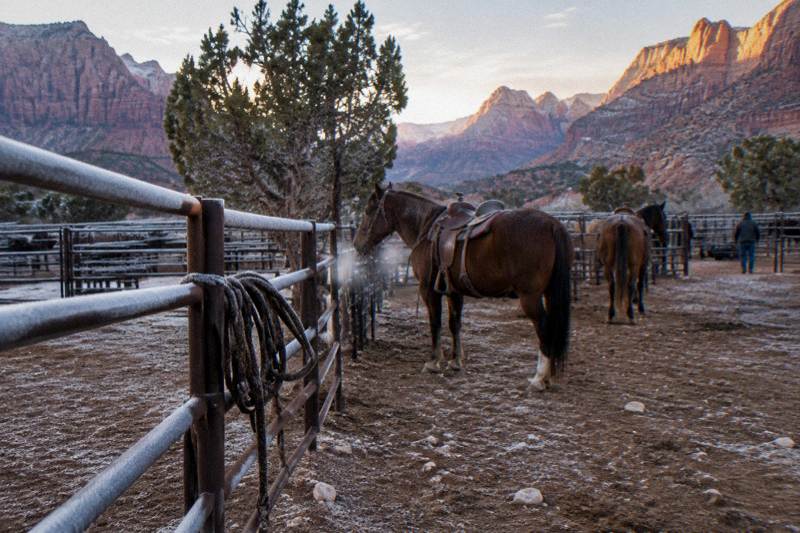
Yes, you can ride horses in Zion National Park: the NPS concessioner runs guided rides along the Virgin River, personal stock is allowed on designated trails, and nearby outside-park rides suit every schedule.
What Are Your Horseback Riding Options In Zion?
Yes. Zion National Park permits horseback riding in two forms: guided rides with the National Park Service's authorized concessioner, Canyon Trail Rides, which typically run from mid-March through October 31, and personal stock, meaning your own horse, mule, or burro, on a designated list of trails with no permit needed for day trips. The concessioner's one-hour Virgin River ride is listed at $60 per person and the three-hour Sand Bench Trail ride at $125, ages 7 and 10 respectively, with a 220 pound weight limit as the operator states it. Once you've settled on a ride, our rundown of the Zion experiences visitors most regret skipping helps you plan the rest of your trip, from the shuttle-only canyon to the east side's slot canyon trails.
The distinction matters more than most first-time visitors expect. The famous part of Zion, the canyon floor with the Virgin River and the Court of the Patriarchs, is exactly where the concessioner's guided rides go. The parts of the park most people picture when they imagine riding, slickrock mesas and pine forests at elevation, sit on the designated-trail network that is open to personal stock rather than guided commercial rides. There is no third option: private operators cannot bring paying customers onto trails inside the park boundaries, which is why every bookable guided ride from a ranch or stable happens on land just outside the park.
The National Park Service lays this out plainly on its horseback riding page: a park concessioner offers guided trail rides along the Virgin River, personal stock use is also allowed on designated trails, and the animals allowed in Zion are horses, mules, and burros. Llamas, dogs, goats, and camels are not permitted as stock, a rule that surprises the occasional llama-trekking visitor. The season for guided rides typically begins mid-March and runs through October 31, weather permitting, so the winter months inside the canyon belong to hikers and the occasional private stock party on the trails that allow them.
For riders who want a guided experience without the in-park constraints, the listings that this site compares and links are all outside the park boundary, clustered near the east entrance at Orderville and Mt Carmel, plus one in Kanab. The most reviewed of them, the East Zion Adventures White Mountain ride, is a one-hour tour from $75 per person rated 4.8 across 506 reviews, and it pairs the ride with a short guided hike into a slot canyon, something no in-park ride includes. These rides do not enter Zion Canyon or follow the Virgin River, and being honest about that boundary is the fastest way to pick the right ride. If riding beside the Virgin River inside the canyon is the experience you actually want, the guide to the Zion Canyon ride along the Virgin River covers what that trip includes and how it differs from the outfitters listed above.
Those three listings cover the spread most riders actually want: the slot-canyon ride at East Zion, the longer canyon ride near Kanab rated 4.9 across 122 reviews, and the gentle one-hour loop around a bison preserve from $68 per person. Later sections break each option down by price, age, and weight limits, after the full picture of what the park itself allows.
Is There Horseback Riding At Zion National Park?
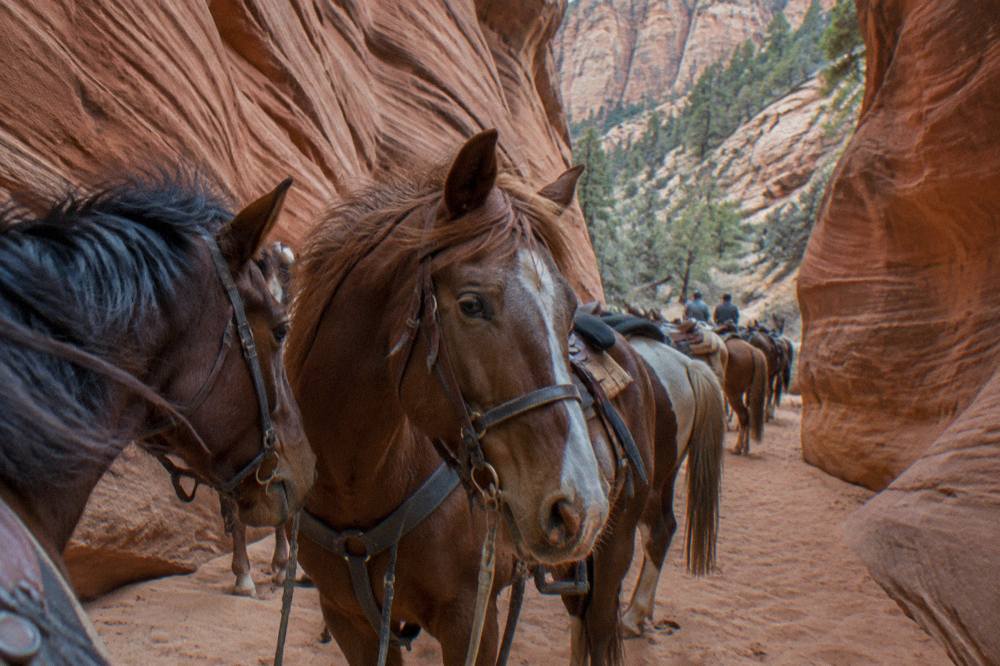
Yes. The park's authorized concessioner, Canyon Trail Rides, offers two guided options inside the park: a one-hour Virgin River ride listed at $60 per person for ages 7 and up, and a three-hour Sand Bench Trail ride listed at $125 per person for ages 10 and up, both with a stated 220 pound weight limit and a season that typically runs March through October. Check-in is at the Emerald Pool trailhead parking lot across the street from Zion Lodge, 30 minutes before the ride.
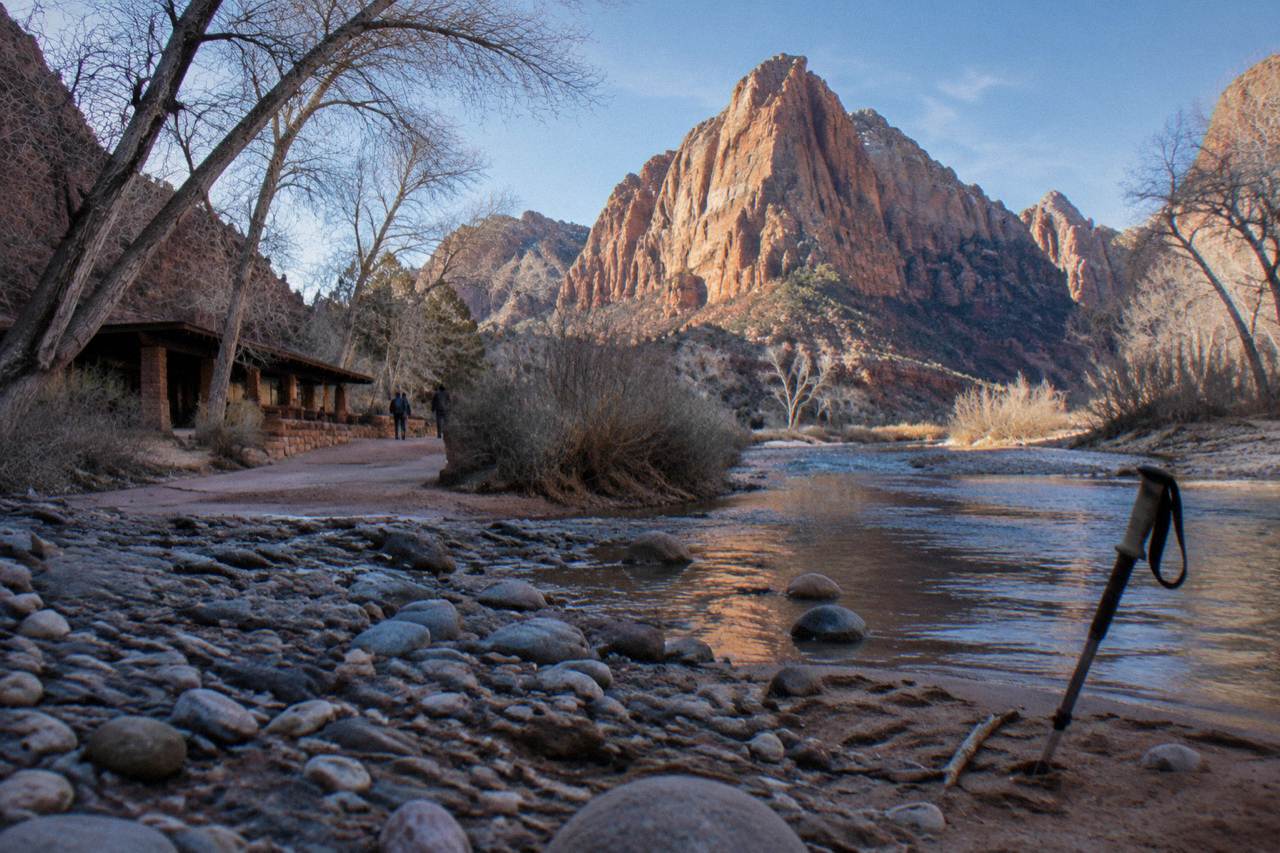
The one-hour ride follows the Virgin River roughly one mile to the Court of the Patriarchs and back to the loading corral, with departures the operator lists at 9:30 am, 11:00 am, 2:00 pm, and 3:30 pm. The three-hour ride climbs the Sand Bench Trail, a route that doubles as the park's commercial horse trail from March to October and opens to personal stock only from November 1 to March 1. Departures for the longer ride are listed at 9:00 am and 1:30 pm. Prices and limits are operator-published and can change; the booking page is the authority, and Canyon Trail Rides is booked directly with the concessioner, not through this site.
One logistics point catches people out: during shuttle season, the Zion Canyon Scenic Drive is closed to private vehicles, and the Emerald Pool trailhead check-in sits on that road. The National Park Service notes that no reservation or ticket is needed to ride the shuttle itself, and shuttles arrive roughly every 5 to 10 minutes on the canyon line, but riders still need to budget the extra time. Anyone with a lodge reservation can drive to the lodge; everyone else should confirm the stop with the operator at booking. Our guide to the shuttle system for horseback riders walks through the schedule in detail.
Riders who would rather skip the shuttle math entirely have a simpler alternative on the east side: the outside-park listings depart from ranches and trailheads reached by car, with parking on site. The Checkerboard Evening Shadow ride from East Zion Adventures is a 1.5-hour sunset tour rated 4.7 across 46 reviews, priced from $89 per person. It is worth saying again for clarity: that ride departs from East Zion near Orderville, it does not travel inside the canyon.
Which Trails Allow Horses Inside The Park?
Personal stock is allowed on a specific NPS list that includes the West Rim Trail north of Cabin Spring, the Hop Valley Trail, the La Verkin Creek Trail west of Beartrap Canyon, the Wildcat Canyon Trail, the East Rim Trail south of Stave Spring, the Chinle Trail, and the Sandbench Trail from November 1 to March 1 only, among others. No permit is required for day trips; overnight stock camping is limited to Hop Valley Site A for one night with a wilderness permit.
The full designated list from the National Park Service covers the higher country on the park's west and east margins rather than the main canyon. Off-trail stock use is allowed in exactly one place: Lower Coalpits Wash, from the trailhead to the junction with Scoggins Wash. Everywhere else, stock must stay on the trail. The wilderness regulations page states the rules riders have to work with, and a few of them shape trip planning more than the trail list does.
The two that matter most are seasonal. Stock is prohibited during spring thaws, unusually wet periods, and any time the Superintendent decides use would cause undue trail damage, which in practice closes the high trails through the muddy weeks of April and May in wet years. Party size is capped at six saddle stock or pack animals, which rules out large group rides on personal horses. There are also hygiene rules that visiting riders sometimes miss: weed-free feed is required before entering the wilderness, grazing is not allowed, manure must be removed from trailers, and stock must be kept 200 feet from water except when watering or crossing.
| NPS stock rule | What it means for riders |
|---|---|
| Designated trails only | Riding is limited to the listed trails; the main canyon floor is not among them for personal stock |
| No day-trip permit | Ride in and out the same day with no paperwork; overnight needs Hop Valley Site A and a wilderness permit |
| Six animals per party | The maximum group size for any stock party |
| Horses, mules, burros only | Llamas, goats, dogs, and camels are prohibited as stock |
| Seasonal closures | Stock prohibited during spring thaws, wet periods, or when trail damage is likely |
| Sandbench window | Sandbench Trail is open to personal stock November 1 to March 1 only |
The reason for the Sandbench split is straightforward: that trail is the concessioner's commercial route during the riding season, so the park gives it to guided rides from March through October and hands it to private riders for the four months around the new year. A winter rider bringing their own horse gets a stretch of the park that summer visitors only see from a concessioner's saddle.
Can You Bring Your Own Horse To Zion?
Yes, day trips with your own horse, mule, or burro need no permit, as long as you stay on the designated trails, keep the party to six animals or fewer, and time the trip outside spring thaws and wet periods. The only overnight option is Hop Valley Site A, limited to one night, and it requires a wilderness permit plus weed-free feed carried in.
Practical planning for a personal-stock trip is mostly about timing and trailheads. The Kolob Terrace Road side of the park offers access points toward the Hop Valley and Connector trails, and the Kolob Canyons and Kolob Terrace roads can close seasonally when snow sits on the gates, so winter riders should check conditions before trailering in. The park itself stays open 24 hours a day, year-round, so access is a road and trail question rather than a gate question.
Riders without their own horse sometimes ask whether a private stable can bring horses into the park for them. It cannot, at least not commercially: guided rides inside the boundary belong to the concessioner. That is the structural reason the east-side and Kanab listings exist, and it is why the comparison between riding inside versus outside the park comes down to what you want to see rather than who has the better horses. Inside means the river corridor and the Sand Bench climb; outside means slot canyons, bison country, and sunset panoramas that take in Zion, Bryce Canyon, and the Grand Staircase from high ground.
Where Can You Ride Near Zion Outside The Park?
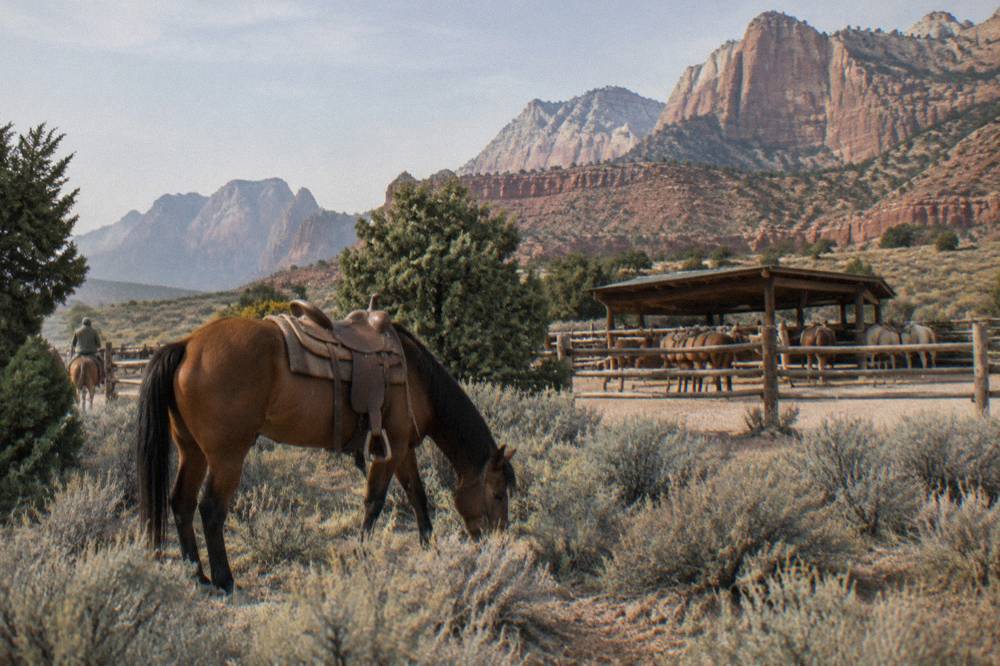
The bookable guided rides cluster in three areas: Orderville and Mt Carmel on the east side of Zion, where East Zion Adventures and Rove & Ramble operate, and Kanab to the south, where Roam Outdoor Adventure Co. runs the Cave Lakes Canyon ride, a 1.5-hour tour from $105 per person rated 4.9 across 122 reviews. All are reached by car, none offers pickup, and none enters Zion Canyon.
The East Zion Adventures White Mountain ride is the anchor listing for most visitors staying on the east side: one hour, from $75 per person, ages 8 and up, with a 100 kg weight limit, departing East Zion with parking at the pickleball courts lot and a short walk to the corrals. Its signature inclusion is the short hike into a slot canyon after the ride, which no other listing in the lineup offers. The same operator's Checkerboard Evening Shadow ride stretches the evening out to 1.5 hours from $89 per person, with meeting details in the booking confirmation.
Rove & Ramble runs four listings from Mt Carmel ranch land, and the differences between them are real rather than cosmetic. The sunrise ride, from $85 per person, trades afternoon heat for dawn light over the Grand Staircase and distant Bryce Canyon. The Grandview sunset ride, from $103 per person, looks toward the same panorama at golden hour with a chance, never a promise, of seeing bison. The Juniper Ridge ride, from $68 per person, is the gentle loop around the bison preserve. The Little Wrangler ride is a 15-minute hand-led loop for children aged 3 and up at from $32, the lowest price point in the lineup.
The Kanab option earns its 4.9 rating across 122 reviews with a greener, higher-country setting than the desert rides closer to Zion. It is a 1.5-hour ride with the same 100 kg weight limit as the East Zion Adventures tours, which makes it the natural pick for riders combining Zion with a Kanab or Bryce itinerary rather than a same-day Zion trip.
How Much Do Horseback Rides Around Zion Cost?
Across the listings this site compares, guided rides run from $32 per person for the 15-minute hand-led Little Wrangler kids' ride to $105 per person for the 1.5-hour Kanab Cave Lakes Canyon ride, with the one-hour East Zion White Mountain ride at from $75. Inside the park, the concessioner's listed prices are $60 for one hour and $125 for three, bookable directly with the operator.
| Ride | Operator | Duration | Listed from price | Rating |
|---|---|---|---|---|
| White Mountain slot canyon ride | East Zion Adventures | ~1 hour | from $75 | 4.8, 506 reviews |
| Checkerboard evening ride | East Zion Adventures | ~1.5 hours | from $89 | 4.7, 46 reviews |
| Sunrise ride | Rove & Ramble | ~1 hour | from $85 | 5.0 across 1 review |
| Grandview sunset ride | Rove & Ramble | ~1 hour | from $103 | 5.0 across 3 reviews |
| Juniper Ridge bison preserve ride | Rove & Ramble | ~1 hour | from $68 | 4.7 across 3 reviews |
| Little Wrangler kids' ride | Rove & Ramble | ~15 minutes | from $32 | no rating on the listing |
| Cave Lakes Canyon ride | Roam Outdoor Adventure Co. | ~1.5 hours | from $105 | 4.9, 122 reviews |
| Virgin River in-park ride | Canyon Trail Rides | 1 hour | $60 (operator-stated) | see the operator's page |
Two patterns are worth reading out of that table. First, the outside-park rides cost more per hour than the in-park concessioner rides, and what the extra money buys is inclusions and setting: the slot canyon hike and the bison preserve. Second, where a listing has no reviews yet, we print no rating rather than guessing at one. The booking page for every listing shows the live price, and prices can vary from the from-figures here.
Budget riders and families get the clearest wins: the Juniper Ridge loop at from $68 is the cheapest full hour in the lineup, and the Little Wrangler ride at from $32 lets a three-year-old ride hand-led while the rest of the family takes a longer loop. Weight limits differ by operator: 100 kg on the East Zion and Kanab rides, while the Rove & Ramble listings state no weight limit at all, which can matter more than a small price gap for some riders; our page on rider weight limits near Zion covers that question in full.
Do You Need An Entrance Pass To Ride In The Park?
Yes. Anyone entering Zion National Park, even just to pass through, needs a recreational use pass: a private vehicle pass is $35 and covers all occupants for 1 to 7 days, a per-person pass is $20, and the in-park guided ride does not include it. Non-US residents aged 16 and over pay an additional fee unless admitted on an Annual or America the Beautiful pass.
The pass question cuts differently depending on which ride you book. The concessioner's in-park rides start inside the boundary, so every rider in your vehicle needs the entrance pass on top of the ride price. The outside-park listings generally do not require a park pass at all, since they depart from private ranch land rather than from inside Zion itself. That inclusion is a genuine cost saving for visitors who have not already bought a pass.
Riders should also know the practical entry logistics: during shuttle season the canyon road closes to private vehicles, and the park's parking often fills early in summer. The east-side rides sidestep both problems entirely, since the White Mountain corrals and the Mt Carmel ranch trailheads sit off the park's eastern approach roads. The fee page lists fee-free entrance days for US citizens and residents each year, which can shift the math for a budget trip.
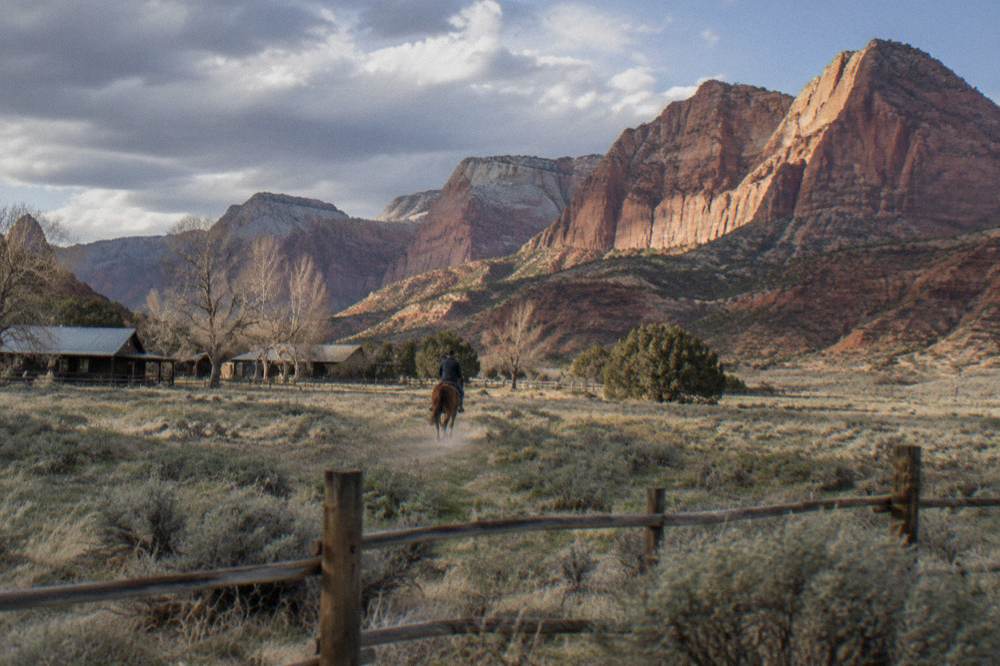
What Is The Best Season For Riding At Zion?
The in-park guided season typically runs mid-March through October 31, while the outside-park listings run on the operators' own schedules, and the best riding windows are spring and fall: summer regularly tops 100°F in the canyon and July through September brings monsoon flash-flood risk that can close slot canyons. Winter riding in the park is limited to personal stock on designated trails, including the Sandbench window from November 1 to March 1.
The heat argument for spring and fall is not cosmetic. Summer in Zion regularly exceeds 100°F, and the monsoon season from July through September brings the flash-flood risk that closes the Narrows and slot canyons when the Virgin River flow rises or a flood warning is issued. Slot-canyon rides on the east side are exposed to those same weather systems, so a morning departure or a sunrise ride, like the Rove & Ramble listing built precisely to beat the heat, is the standard summer advice. Fall adds changing foliage that starts at higher elevations and reaches the canyon by late October and early November.
Crowds follow the same curve. Summer brings roughly half a million visitors a month, and parking is often full by 9 am. The outside-park rides feel that pressure far less than anything inside the boundary, since their trailheads sit on ranch land with their own parking, but lodge and vacation-rental prices in Springdale and the east-side towns track the park's peak. Riders who can travel in the shoulder months get cooler hours, open trails, and easier logistics in one package.
For the full month-by-month picture, including how the shuttle schedule shifts through late fall, the best month to visit Zion breakdown covers the trade-offs in detail. The short version for riders: book the in-park concessioner rides early in the season window, and treat sunrise and evening departures as the smart plays from June through September. Zion Horseback Tours compares the bookable listings year-round, and the live listing for each ride shows current departure times.
By this point the decision usually narrows to timing and budget rather than quality. The trio below covers the three most common picks: the slot-canyon hour at East Zion, the longer Kanab canyon ride, and the gentle bison-preserve loop that suits families and first-time riders at the lineup's lowest full-hour price.
Common Questions About Riding Horses In Zion
Can you ride horses in Zion National Park?
Yes. Guided rides with the park's authorized concessioner typically run mid-March through October 31, and personal horses, mules, and burros are allowed on a designated list of trails with no permit for day trips. Guided rides with private stables happen on ranch land just outside the park boundary.
Is there horseback riding at Zion National Park?
Yes. Canyon Trail Rides, the National Park Service concessioner, offers a one-hour Virgin River ride listed at $60 per person for ages 7 and up, and a three-hour Sand Bench Trail ride listed at $125 per person for ages 10 and up, with a 220 pound weight limit as stated on the operator's page.
Do I need a permit to bring my own horse to Zion?
No permit is required for day trips on the designated stock trails. Overnight stock camping is limited to Hop Valley Site A for one night and requires a wilderness permit. Stock is prohibited during spring thaws, unusually wet periods, or when use would cause trail damage.
Can children ride horses at Zion?
Inside the park, the concessioner's minimum ages are 7 for the one-hour ride and 10 for the three-hour ride. Outside the park, only the White Mountain ride lists a minimum age of 8, the Checkerboard, Kanab and Rove & Ramble rides state no minimum age, and the Little Wrangler hand-led ride takes children from age 3.
Do the outside-park rides enter Zion Canyon?
No. The listings near Orderville, Mt Carmel, and Kanab ride on private ranch land with panoramas toward Zion, Bryce Canyon, and the Grand Staircase, but they do not enter the canyon or follow the Virgin River. Only the in-park concessioner's rides travel the canyon floor.
Is horseback riding in Zion worth it?
For most visitors, yes: the one-hour formats fit a park day without consuming it, and the reviewed listings score well, with the White Mountain ride at 4.8 across 506 reviews and the Kanab Cave Lakes ride at 4.9 across 122. Riders short on time or budget should weigh the from-prices, $32 to $105 across the lineup, against the half-day logistics of the in-park option.