Is Horseback Riding Hard On Your Body?
An honest look at the physical cost of horseback riding near Zion: which muscles work, how sore a one-hour ride leaves you, and how a three-hour ride compares.
The honest answer to the question most riders ask before booking: a one-hour guided trail ride near Zion is a light physical effort for most people, comparable to a long walk, with sore inner thighs and hip muscles the next day being the most common complaint. A three-hour ride is a different matter, and the difference is not distance alone but duration under an unfamiliar posture.
That is the short version. The longer version depends on your fitness, your saddle time, and which ride you actually book. Around Zion the choices span a remarkable range: the 15-minute hand-led Little Wrangler kids' ride at the Rove & Ramble ranch near Mt Carmel, the one-hour East Zion White Mountain ride that finishes with a short hike into a slot canyon, and the in-park Canyon Trail Rides options the concessioner lists at one hour along the Virgin River and three hours on the Sand Bench Trail. The physical demands of those rides are not the same, and pretending they are does nobody a favor. If the longest option is the one that tempts you, the full guide to the Sand Bench Trail ride in Zion walks through what that climb actually asks of your legs, hips, and back.
This site exists to compare those listings honestly, and the physical question is one buyers weigh before booking a three-hour ride more often than almost any other. So here is the reporting, drawn from what operators state on their pages, what the park service publishes, and what riders themselves report after the fact.
How Physically Demanding Is A Horseback Ride?
For most reasonably healthy adults, a guided one-hour ride near Zion is moderately physical but not hard: riders commonly report sore adductors, hips, and lower back for a day or two, and rarely anything worse. The difficulty scales steeply with duration, gait, and saddle unfamiliarity, so a three-hour ride can genuinely tire an unprepared rider even though a one-hour version would not.
The first thing to understand is that a guided trail ride is not a workout in the gym sense. You are not pedaling or lifting. The horse is doing the locomotion. What your body is doing instead is stabilization: your deep core, your hip stabilizers, and your inner thigh muscles contract continuously to keep you balanced over a moving platform that sways, steps, and occasionally stumbles. It is isometric work, the kind that does not feel like much while it is happening and announces itself loudly the next morning.
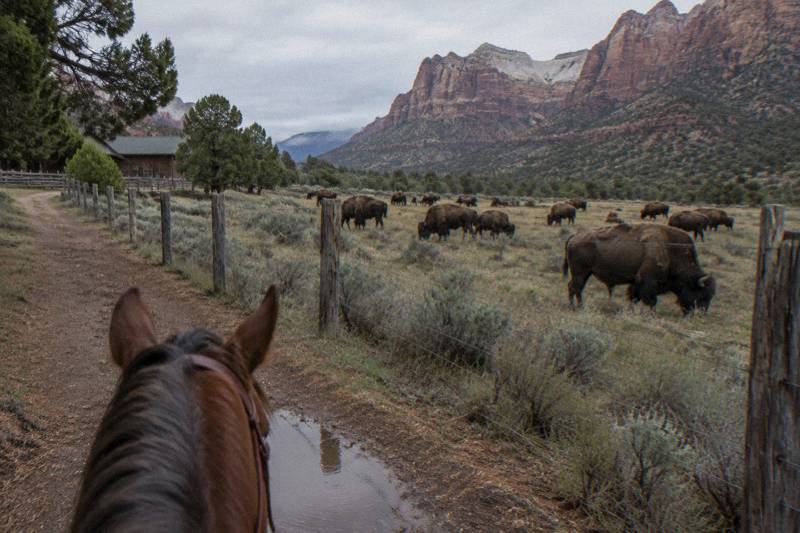
Riders who describe a one-hour guided ride as easy are usually describing the effort during the ride, and they are right. Riders who describe the day after as surprising are also right. Both things are true at once. The Rove & Ramble Juniper Ridge bison preserve ride, a one-hour loop from $68 per person, is a walking-pace outing suitable for beginners, and the listing still expects an hour of continuous sitting and balancing. That hour is enough to find muscles most desk jobs never touch.
Which Muscles Does Horseback Riding Actually Use?
Riding works the adductors of the inner thigh, the glutes, the hip flexors, the deep abdominal core, and the lower back stabilizers, plus calves and ankles for stirrup contact. Arms and shoulders do comparatively little on a guided walk-only ride, since the horse is guided by a wrangler and the reins are mostly a formality for beginners.
The inner thigh story deserves its own paragraph because it is the one that surprises people. Your adductors grip the saddle, not deliberately but reflexively, every time the horse shifts. Over an hour at walking pace that is thousands of small contractions. Riders who have never sat on a horse feel it the next day when they climb stairs, and it fades within a day or two. Riders who do it regularly stop noticing entirely, which is why wranglers can spend full days in the saddle.
| Body area | What it does during the ride | How it feels the next day |
|---|---|---|
| Inner thigh adductors | Grip the saddle reflexively with every step | The classic complaint, sore for 1 to 2 days |
| Glutes and hip flexors | Stabilize the pelvis over the moving horse | Mild stiffness, worst after first rides |
| Deep core | Continuous micro-corrections to sit tall | A worked-out feeling, rarely painful |
| Lower back | Holds riding posture hour after hour | Can aggravate existing back conditions |
| Calves and ankles | Stirrup contact, weight in the heels | Usually nothing beyond mild tightness |
| Arms and shoulders | Mostly quiet on a guided walking ride | Rarely sore at walking pace |
The core and lower back are the second act. Sitting tall while the horse moves means your torso is doing micro-corrections the whole time, and riders with existing lower-back problems sometimes find the posture aggravates them, especially on a longer ride. This is worth being direct about: if you have a diagnosed back condition, a one-hour ride is a reasonable experiment and a three-hour ride is a gamble. Ask the operator before booking; every stable in this area would rather answer that question in advance than have a rider in pain halfway up a trail.
Guides assign horses based on the rider's experience and comfort level, which reduces the physical challenge considerably, because a calm, well-matched horse moves more predictably than a lively one. Operators also ask that riders wear closed-toe shoes and comfortable outdoor clothing, and helmets are recommended for all riders on guided tours near Zion, per the guidance operators publish alongside their bookings.
How Sore Will You Be After A One-Hour Ride?
After a one-hour walking-pace guided ride, a first-time rider can expect mild to moderate soreness in the inner thighs and hips for one to two days, occasionally some seat-bone tenderness, and rarely anything beyond that. Riders with prior saddle time usually feel little or nothing the next day.
Every one-hour listing in this site's comparison is a walk-and-occasional-jog format at most, and several are pure walking rides. The one-hour White Mountain ride with East Zion Adventures, rated 4.8 across 506 reviews, is the most-reviewed listing on the lineup, and its format is typical: about an hour in the saddle at walking pace, finishing with a short hike into a slot canyon. The hike part is worth noting for the body question, because dismounting and walking is itself a change of load, and slot canyon terrain is sandy and uneven. Riders report that the variety actually helps; an hour split between saddle and foot leaves fewer complaints than an hour entirely in the saddle.
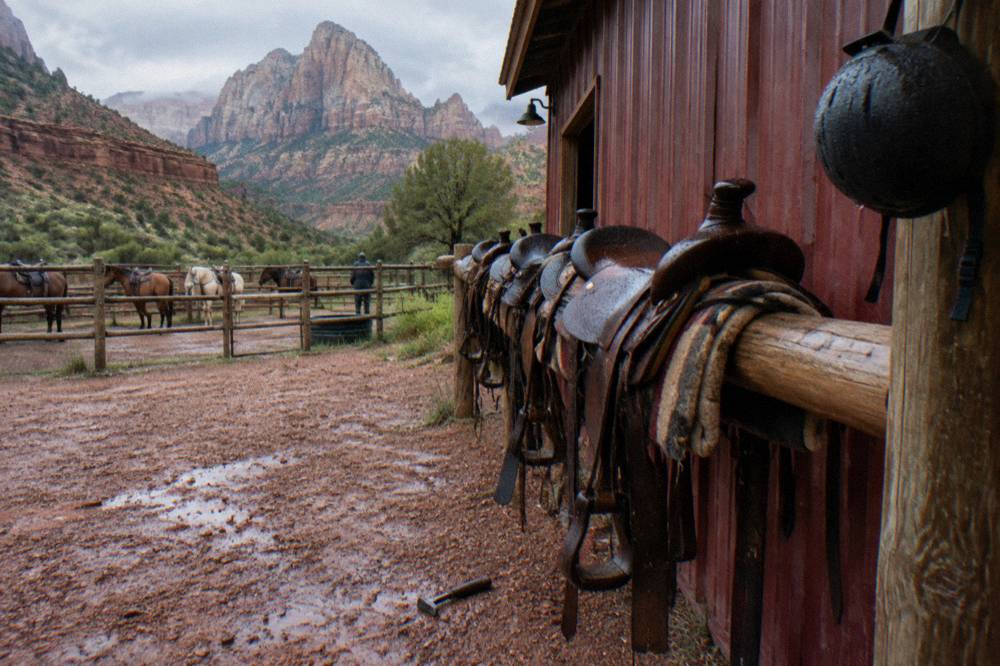
Saddle design matters more than most beginners realize. The ranch-style saddles used on these rides are built for stability and beginners, with a deep seat and a pronounced horn, which is more forgiving than an English saddle. Seat-bone soreness comes from duration and posture rather than the saddle being wrong, and it resolves quickly. The classic advice holds: shift your weight slightly during the ride when the guide offers a break, and do not grip with your knees, let your weight drop into your heels.
The Juniper Ridge bison preserve ride near Mt Carmel fits the same profile: one hour, from $68 per person, with a guide and free cancellation. Its listing is aimed squarely at families and first-timers, which tells you the operator expects the ride to be manageable for people with zero saddle experience. If the question in your head is "can my body do this," a one-hour loop is the format designed to answer yes. See the Juniper Ridge ride details for limits and inclusions.
What Is A Three-Hour Ride Like Compared To One Hour?
A three-hour ride is substantially harder on the body than a one-hour ride, and not three times as hard but disproportionately so: the soreness that a first-timer feels after one hour often peaks after the second, so hour three is spent on already-tired muscles. Experienced riders manage it comfortably; genuine beginners should treat three hours as a real physical commitment.
The clearest local example is the in-park concessioner option. Canyon Trail Rides, the park's authorized concessioner, runs a one-hour Virgin River ride and a three-hour Sand Bench Trail ride inside Zion National Park; the operator's page lists the one-hour ride at $60 per person for ages 7 and up, and the three-hour ride at $125 per person for ages 10 and up, both with a stated 220 lb weight limit (see Riding Horses In Zion). The operator's booking page is the authority on current figures, and those rides are booked directly with the concessioner rather than through this site. The age jump from 7 to 10 between the two rides is itself a signal: the concessioner prices the longer ride for bodies that can hold a saddle for a morning.
| Ride format | Duration | Typical physical cost for a first-timer |
|---|---|---|
| Hand-led kids' loop | 15 minutes | Effectively none, walking pace led by a wrangler |
| One-hour guided ride | ~1 hour | Mild soreness, inner thighs and hips, 1 to 2 days |
| Longer evening or canyon ride | ~1.5 hours | Moderate soreness, seat bones start to register |
| In-park Sand Bench format | ~3 hours | A real commitment, hour three on tired muscles |
Outside the park, the nearest thing to a longer-format listing on this lineup is the Kanab Cave Lakes Canyon ride, about 1.5 hours from $105 per person, rated 4.9 across 122 reviews. An hour and a half is a useful middle ground: long enough to feel like a real ride, short enough that most first-timers finish tired but functional. Riders weighing a three-hour commitment who have never ridden would be wise to test themselves on a one-hour or 1.5-hour format first, and the Kanab listing is a sensible place to do that. Compare the Kanab canyon ride against the shorter options before deciding.
Gait is the other variable. Everything on this lineup is a guided walking ride, but a horse that trots even briefly changes the math completely, since trotting is the gait that separates riders from their comfort. Ask at booking what pace the ride keeps; on family-format rides like these, walking is the norm.
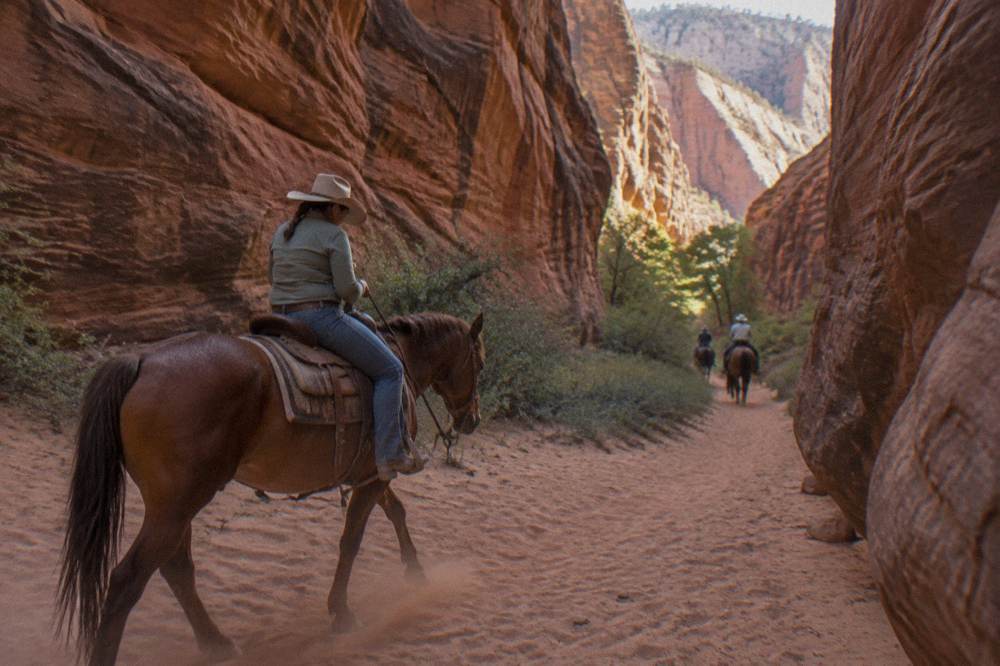
Who Finds Riding Physically Hard, And Who Does Not?
The riders who struggle most are those with existing lower-back or hip conditions, very low core strength, or significant fear tension, since nervous riders grip constantly and exhaust themselves. Children, older riders, and pregnant riders should match the format to their body, and the youngest riders belong on the hand-led kids' format rather than a trail string.
Fear deserves more credit as a physical factor than it gets. A relaxed rider moves with the horse and spends little energy. A frightened rider braces every muscle against every step, and an hour of that is genuinely exhausting, more so than the riding itself. This is why the calm-horse, beginner-first formats around Zion's east side work so well for nervous riders: predictability is the antidote. The Checkerboard evening ride from East Zion Adventures, about 1.5 hours from $89 per person and rated 4.7 across 46 reviews, keeps the same walking-pace format but stretches it into the golden hour.
For children, the lineup has a purpose-built answer. The Little Wrangler ride is a 15-minute hand-led loop from $32 per person, minimum age 3, where an experienced trail wrangler leads the horse on foot around a scenic loop near the cabins. Fifteen minutes of being led is essentially zero physical load, and it is the format that matches a three-year-old's attention span anyway. The White Mountain tour sets its minimum age at 8, Little Wrangler takes riders from age 3, and the remaining rides publish no age minimum. Those ages are listing-stated, and they track what the rides physically ask of a small body.
Rider weight is a separate gate from fitness. The listings state 100 kg limits on the East Zion Adventures and Kanab rides, while the Rove & Ramble listings state no weight limit; the in-park concessioner states 220 lbs, which is about 100 kg. Common riding guidance also references a general horse-welfare guideline that a rider should be under roughly 20 percent of the horse's weight, though that is industry guidance rather than a park rule. For borderline cases, ask the operator directly; none of them promise to accept a rider over the limit, and the listing is the authority.
How To Reduce Soreness Before And After The Ride
Practical measures that consistently help: arrive with loose hips and warmed-up legs, sit deep rather than gripping with the knees, take the walking breaks the guide offers, and after the ride walk around rather than collapsing into a car seat, then hydrate and expect mild adductor soreness the next day regardless.
Before the ride, a few minutes of hip opening is the single highest-value preparation. Standing hip circles, a brief lunge stretch per side, and ankle circles take under five minutes and pre-load exactly the muscles that will work. Eat something light an hour before; an empty stomach on a hot trail is its own problem, and summer temperatures in Zion regularly exceed 100°F, so a water bottle, sunscreen, and a hat belong in the packing list for any ride from June through September. The East Zion sunrise ride, from $85 per person near Mt Carmel, exists partly for this reason: it front-loads the riding before the heat, with the listing promising views of the Grand Staircase and Zion's East Gate in first light. That is a body-management choice as much as a photography one.
| Stage | What helps | Why it works |
|---|---|---|
| Night before | Light activity, decent sleep | Tired, tight muscles complain more |
| One hour before | Light food, water, hip and ankle stretches | Pre-loads the exact muscles that will work |
| During the ride | Weight in heels, quiet hands, take every break | Less gripping means less isometric fatigue |
| Straight after | Walk around, hydrate, skip the immediate car collapse | Keeps hips from seizing up on the drive |
| Next morning | Gentle walking, expect mild adductor soreness | Normal recovery, fades within a day or two |
During the ride, posture does the protective work. Weight in the heels, shoulders over hips, hands quiet. When the guide calls a break and riders dismount briefly, take it, even if you feel fine at that moment; the riders who skip breaks are the ones who describe the last half hour as the long half hour. On rides that include a dismounted section, like the White Mountain ride's slot canyon hike, use it deliberately as a reset.
Afterward, the honest expectation-setting matters more than any technique: you will probably feel your inner thighs tomorrow, and that is normal, not an injury. Gentle walking the same evening, water, and an ordinary night's sleep handle the vast majority of it. Sharp joint pain, numbness that persists, or back pain that does not fade in a couple of days is a reason to see a clinician, but ordinary muscle soreness after a first ride is simply the receipt for an hour of isometric work your body had never done.
The Verdict On Riding Near Zion And Your Body
A one-hour guided ride near Zion is a low-to-moderate physical ask that most bodies handle well, with one or two days of mild soreness as the typical cost. A three-hour ride is a genuine commitment best taken with prior saddle time, and the hand-led kids' format is effectively free of physical demand. Match the format to the body and the answer is almost always yes. Once you've matched the ride to your body, the next step is matching the ride to your itinerary, and our guide to how many days to spend in Zion shows exactly where saddle time fits into a short or long trip.
The format ladder on this lineup makes that matching easy. At the bottom, the 15-minute Little Wrangler hand-led loop for ages 3 and up. In the middle, a cluster of one-hour walking rides: Juniper Ridge at the bison preserve, the White Mountain slot canyon ride, the sunrise and sunset rides out of Mt Carmel. Above them, the 1.5-hour formats, Checkerboard in the evening and the Kanab canyon ride. The three-hour in-park concessioner format sits at the top, booked directly with the operator. Each step up adds duration, and duration is the variable that drives soreness more than terrain, pace, or horse.
For readers planning a wider Zion trip around a ride, the physical question connects to logistics questions this site covers elsewhere, including what to wear riding in Zion and the honest comparison in horseback riding in Zion for beginners. And if you are weighing the whole idea, Zion Horseback Tours keeps the full comparison of east-side and Kanab listings in one place, with the ride picker to narrow it down.
Common Questions About Horseback Riding And Your Body
Is horseback riding hard on your body?
For most healthy adults a one-hour guided walking ride is a moderate effort, with sore inner thighs and hips for a day or two as the usual aftereffect. Longer rides scale up steeply, and a three-hour format is a real physical commitment for a first-time rider.
What muscles get sore after horseback riding?
The inner thigh adductors, the glutes, the hip flexors, and the lower back stabilizers do most of the work, with seat-bone tenderness common on longer rides. Arms and shoulders do little on a guided walking ride.
Is a three-hour horseback ride too long for a beginner?
It can be. Soreness often peaks after the second hour in the saddle, so a first-timer spends the final hour on tired muscles. Trying a one-hour or 1.5-hour ride first is the safer way to learn how your body responds.
Can you ride horses if you have back problems?
Ask the operator before booking. The riding posture involves continuous micro-corrections in the lower back, and riders with diagnosed back conditions sometimes find longer rides aggravate it. A one-hour ride is a reasonable test; a three-hour ride is a gamble.
Is horseback riding good exercise?
It is genuine isometric core, hip, and leg work, and regular riding builds balance and postural endurance, but a single guided walking ride burns roughly what a brisk walk does. Treat it as an experience with a physical side effect, not a workout.
How do I stop my legs from hurting after riding?
Sit deep and let your weight drop into your heels rather than gripping with your knees, take the dismount breaks the guide offers, walk around after the ride instead of sitting immediately, and expect mild soreness the next day anyway. It fades within a day or two.